Project
Wakesurf Board
Client
Snake Surf
Date
July 2024 - Present
Service
Design and Build
Project Overview
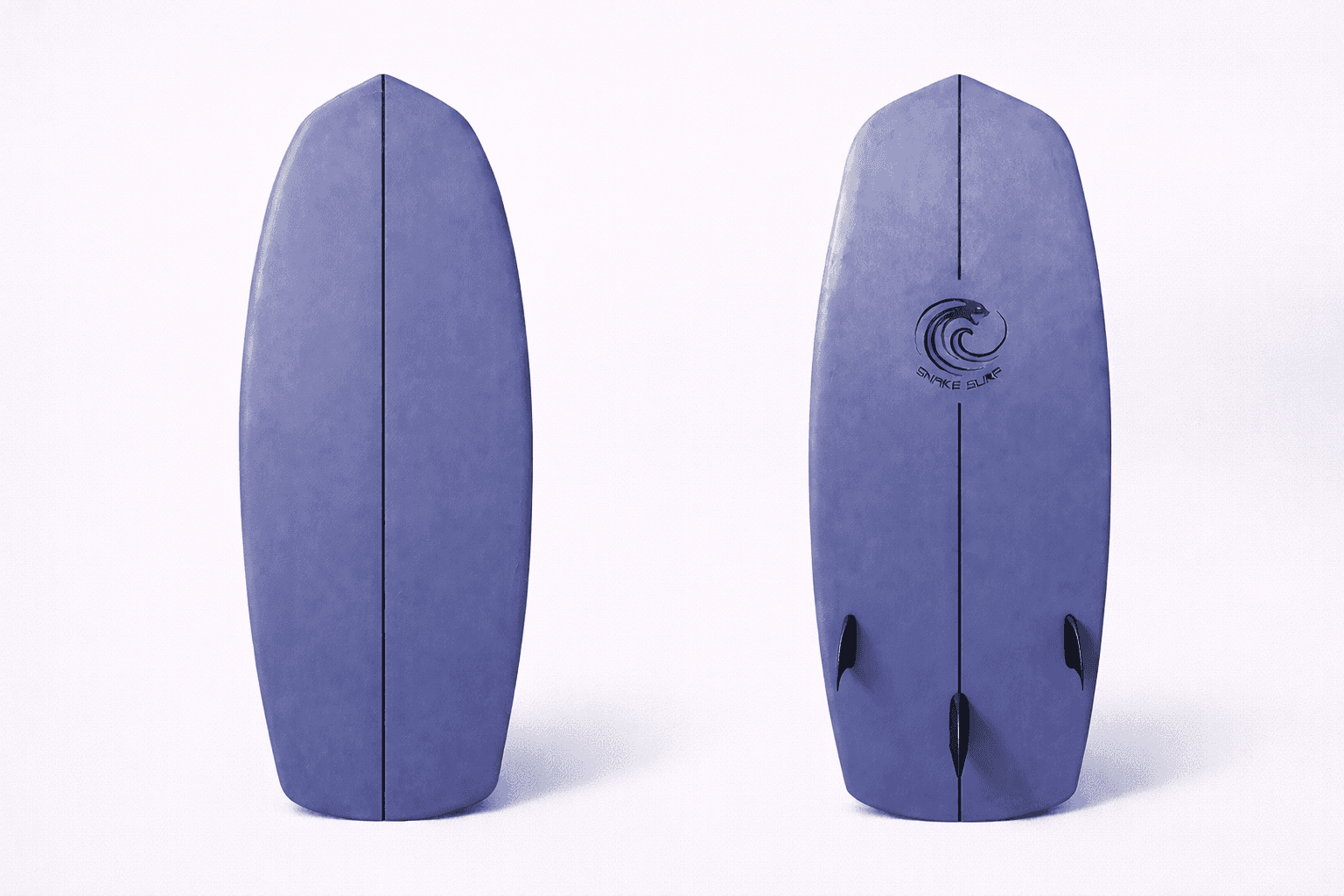
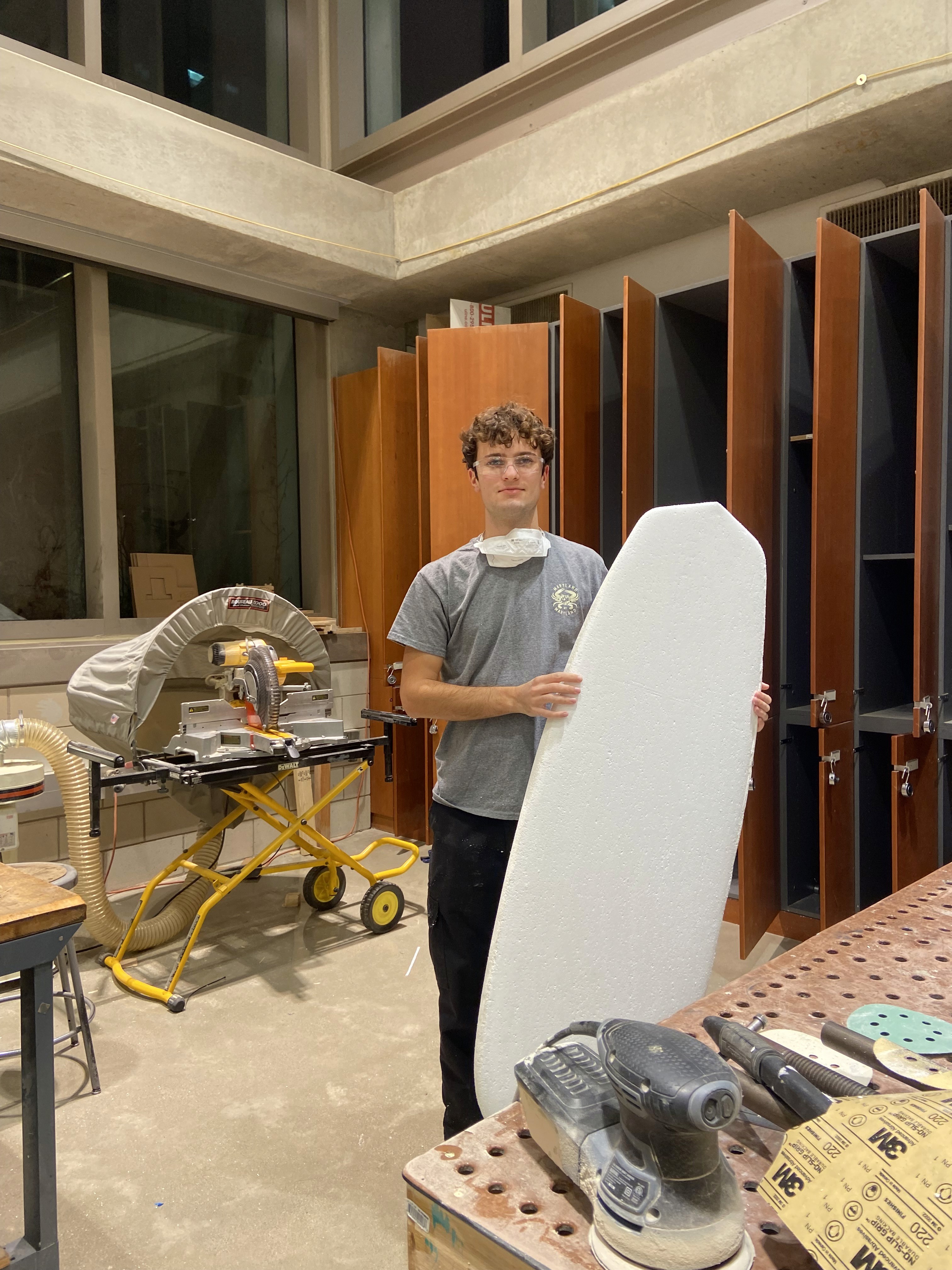
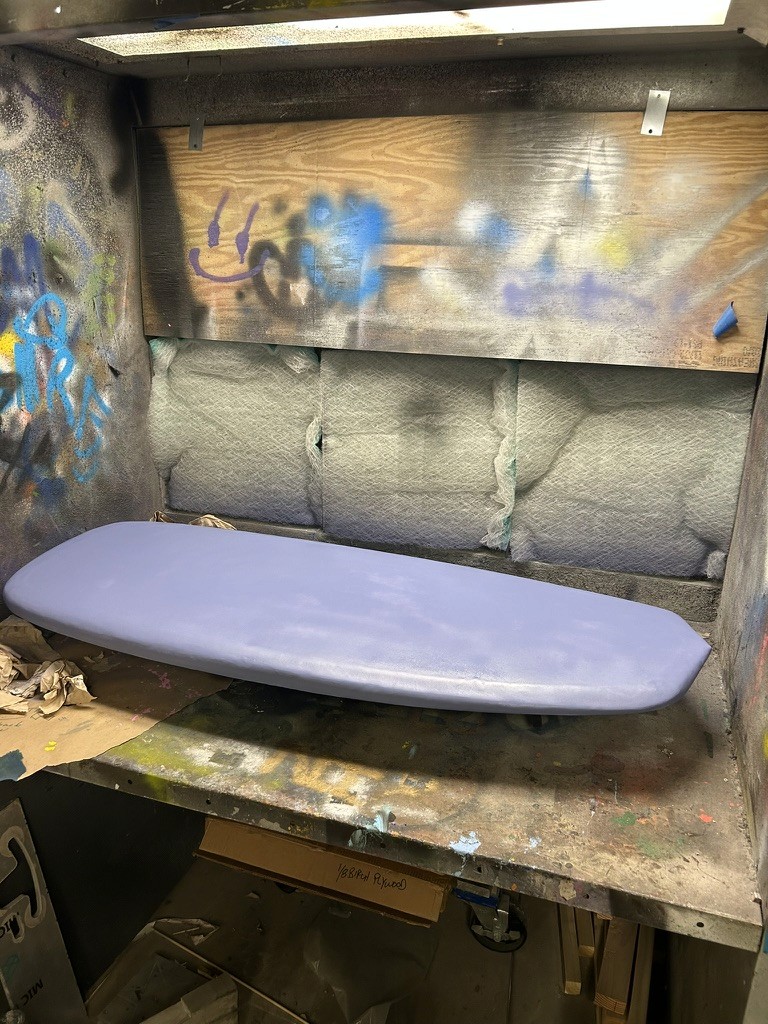
This project involved the design and fabrication of a custom wakesurf board developed through iterative shaping and composite construction. The goal was to understand how platform geometry, rocker profile, and material layup influence stiffness, durability, and on-water performance, while also exploring alternative composite materials as part of a longer-term effort toward a viable, scalable product.
The board served as a controlled platform for experimentation, balancing hands-on fabrication with intentional design changes across multiple iterations.
Skills Strengthened
Composite Materials & Laminate Design
Manufacturing Process Planning
Design for Performance Tradeoffs
Experimental Prototyping & Iteration
Hand Fabrication & Finishing
Cost–Performance Optimization
Shape and performance tradeoffs
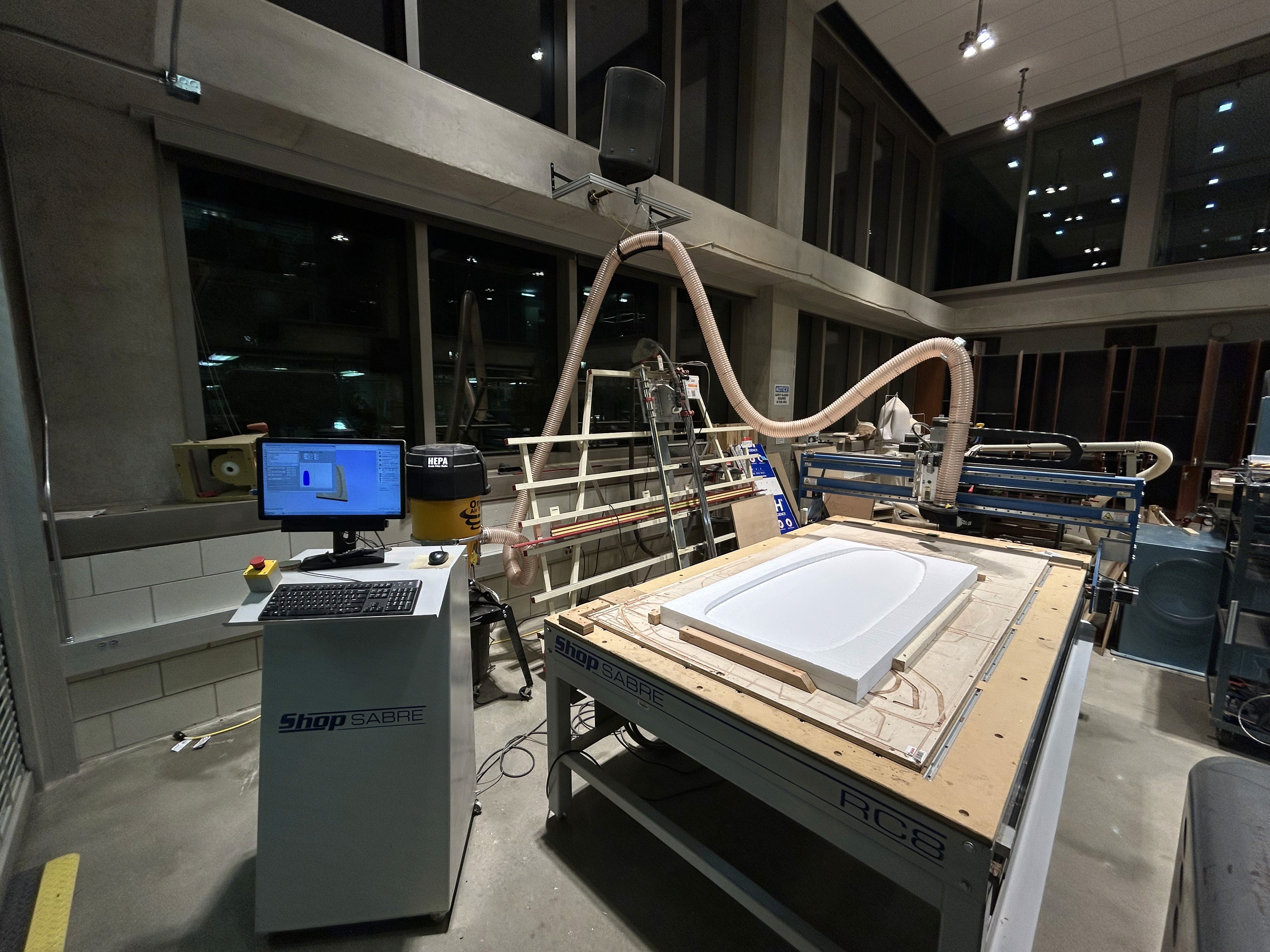
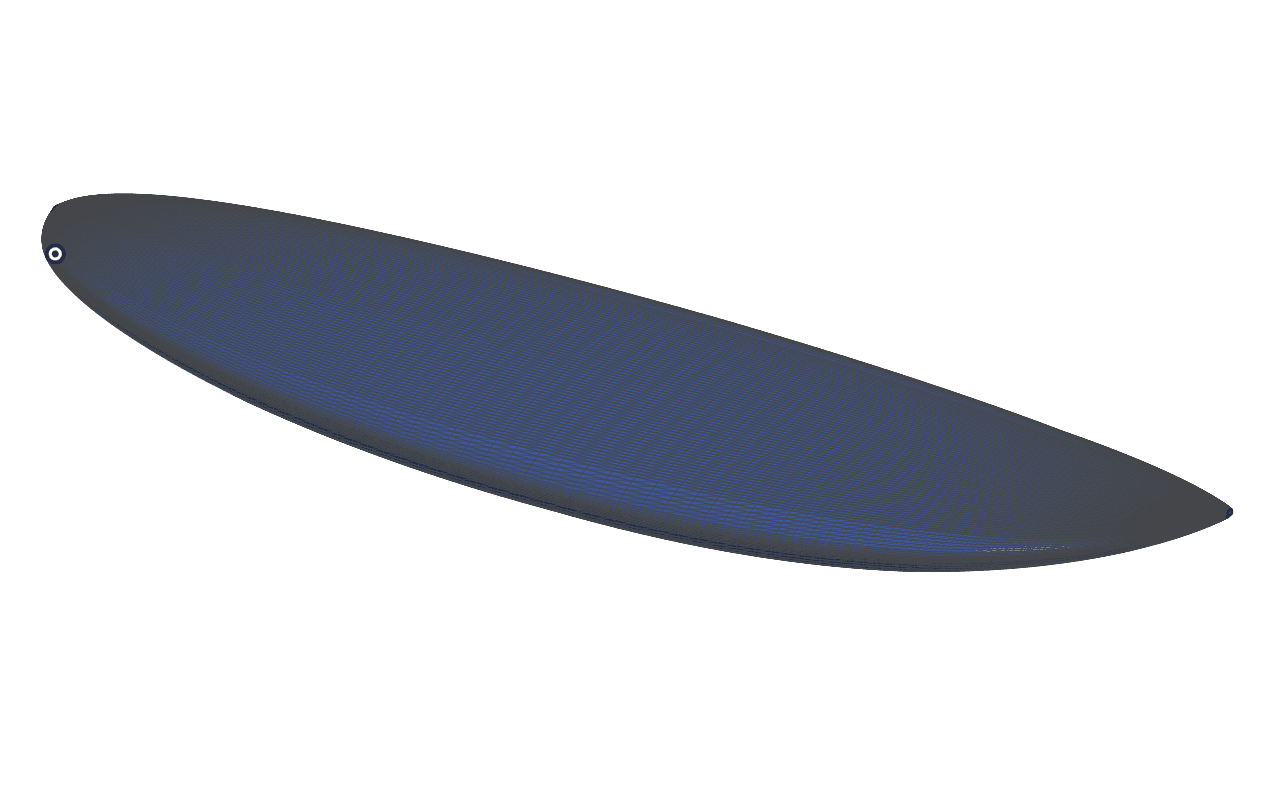
The board’s outline, rocker profile, and volume distribution were iteratively adjusted to explore how small geometric changes affected speed generation, stability, and maneuverability. Changes to rocker influenced how easily the board accelerated and released from the wake, while outline adjustments affected edge hold and responsiveness.
Through repeated riding and comparison, it became clear that performance was highly sensitive to relatively minor geometric differences, reinforcing the importance of intentional, incremental shape changes rather than broad redesigns.
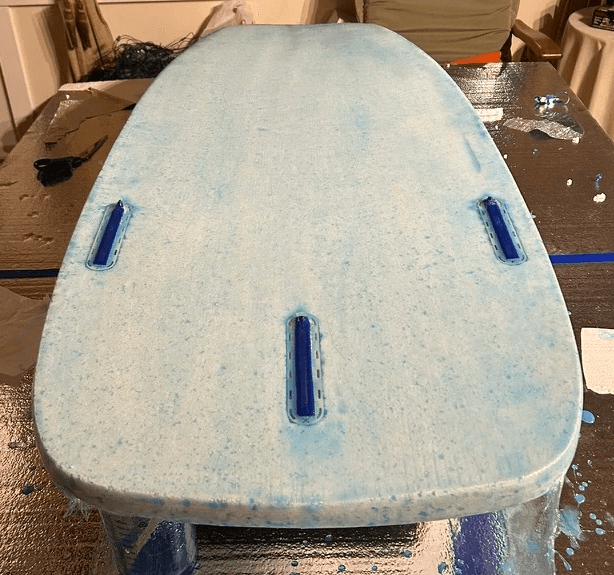
Materials and construction
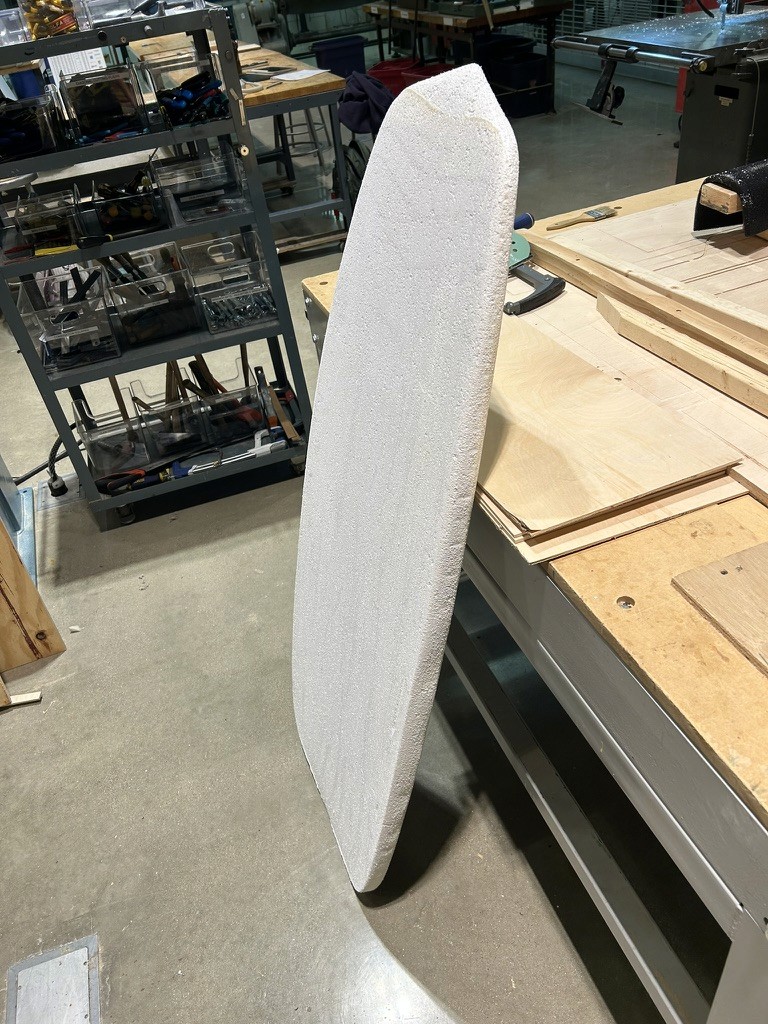
Composite layups were selected and modified to balance stiffness, durability, and ride feel. Variations in reinforcement placement and fiber orientation revealed how stiffness distribution influenced both responsiveness and vibration damping on the water.
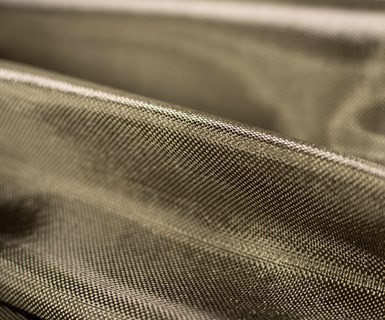
In parallel, the project began exploring alternative composite materials with sustainability in mind. Early experimentation with basalt and flax fibers focused on understanding how these materials compared to conventional fiberglass in terms of stiffness-to-weight behavior, impact resistance, and manufacturability, with an eye toward future small-batch production.
Iteration as feedback
Each build was treated as a test platform rather than a final product. On-water performance, durability observations, and rider feedback directly informed subsequent design decisions, creating a tight feedback loop between fabrication and use.
This approach emphasized learning through controlled iteration, where isolating individual changes made it possible to draw clearer conclusions about cause and effect. Over time, this process shifted the project from exploratory prototyping toward a more disciplined product development mindset.
Outcome
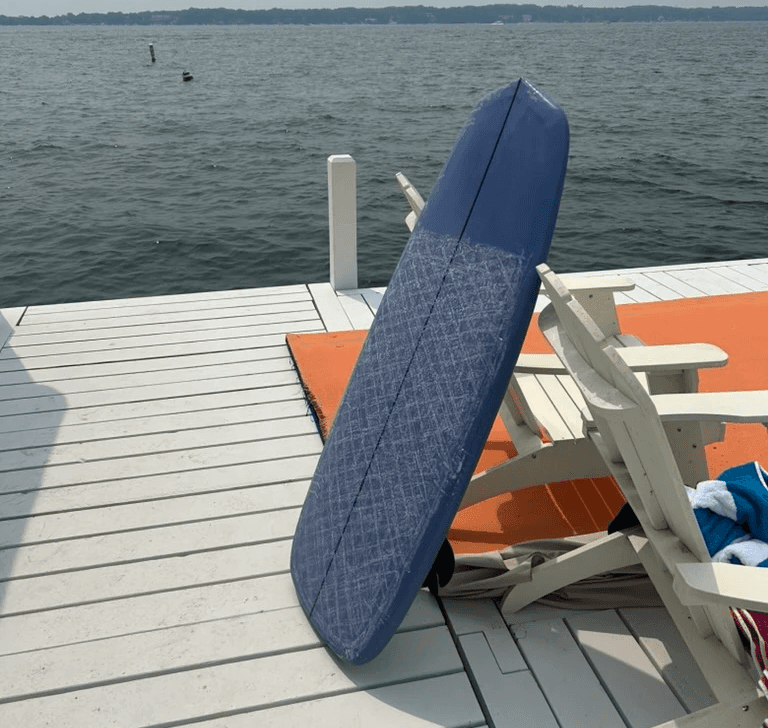
This board became the first in an ongoing series rather than a standalone experiment. After riding it, the performance exceeded expectations to the point that it sparked broader interest among friends and collaborators, leading to the early formation of Snake Surf, a small venture focused on wakesurf board design and production.
One of the most important lessons from this project was the value of controlled iteration. Early builds that changed multiple variables at once made it difficult to understand why performance improved or degraded, while more deliberate, isolated changes produced clearer insight. This reinforced the importance of structuring experimentation, even in highly tactile, rider-driven systems.
The project also revealed the tension between custom performance and scalability. Features that worked well in a one-off build did not always translate cleanly to repeatable manufacturing. As a result, the work has shifted toward experimenting with alternative composite materials—such as basalt and flax fiber—to evaluate how stiffness, durability, and sustainability can be balanced in designs intended for small-batch production.
Overall, this project reframed how I think about product development. Performance alone is not the endpoint; understanding how a design can evolve into a repeatable, manufacturable system is equally important. The board served as both a successful prototype and a foundation for continued material and process experimentation.
Related projects