Project
Matcha Can
Client
Sumi matcha
Date
Service
Brand Identity
Project Overview
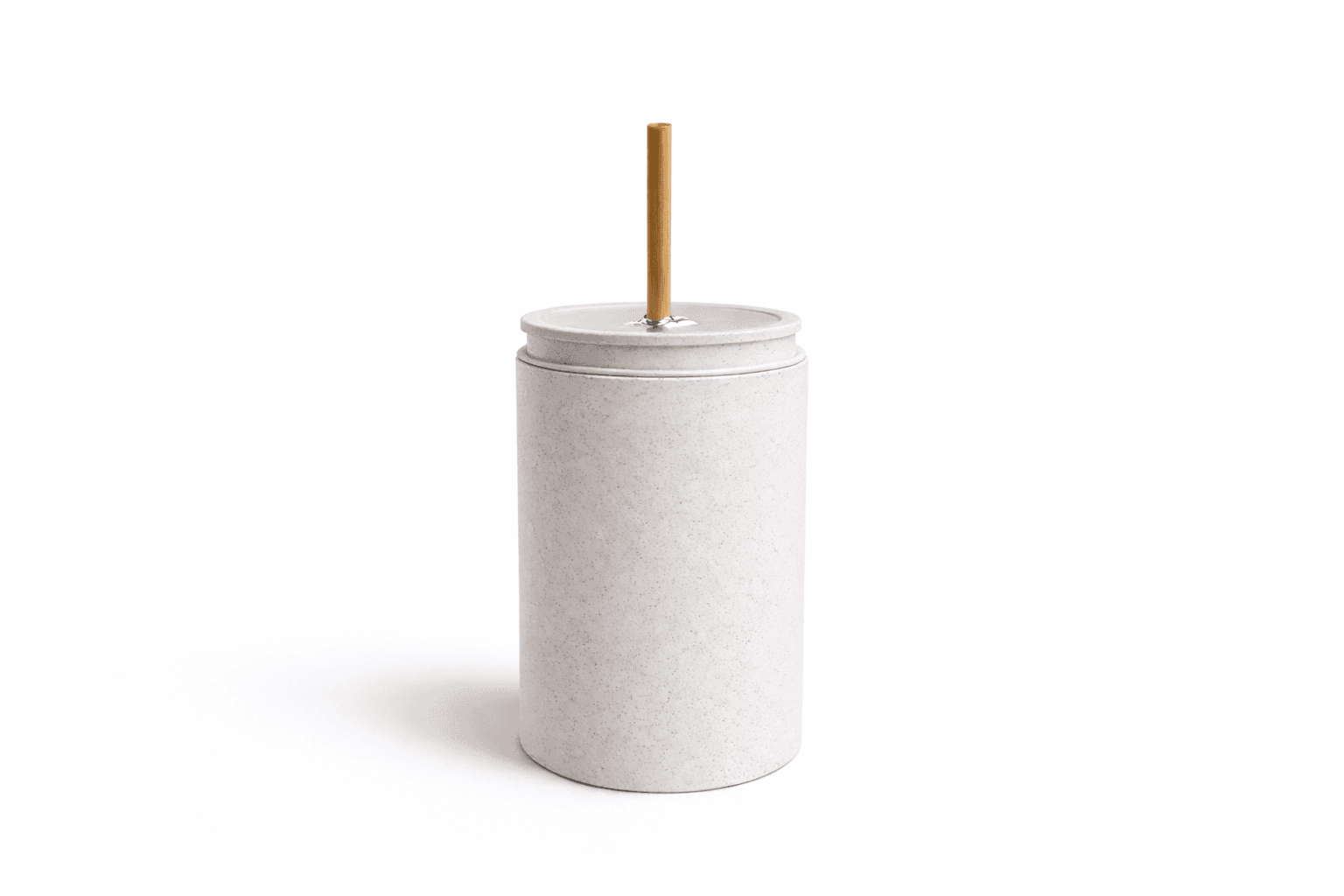
This project explored the design of a beverage can that keeps matcha powder fresh by separating ingredients until the moment of use. The goal was to develop a compact, mechanically simple system that enables on-demand mixing while remaining compatible with existing canning and manufacturing processes.
Rather than creating a novelty container, the focus was on designing a scalable, manufacturable product concept that could realistically move toward production.
Design Focus
Ingredient Separation & Sealing
The core challenge was preventing premature mixing while maintaining airtight integrity and shelf stability. The internal architecture required a sealed chamber capable of storing dry matcha separately from liquid components without compromising food safety or can pressure behavior.
Seal geometry and activation mechanisms were considered in relation to both user force requirements and long-term reliability.
Mechanical Actuation
The mixing system needed to be intuitive and reliable while remaining compact enough to fit within standard can dimensions. Concepts explored internal puncture mechanisms and controlled-release systems that could be triggered by the user without additional tools.
A key constraint was minimizing part count to preserve manufacturability and reduce failure points.
Manufacturing Compatibility
A major design constraint was compatibility with existing high-speed canning infrastructure. The design avoided requiring entirely new production lines, instead focusing on modifications that could be integrated into established filling and sealing workflows.
This constraint heavily influenced geometry, materials, and assembly strategy.
Inspiration & Precedents
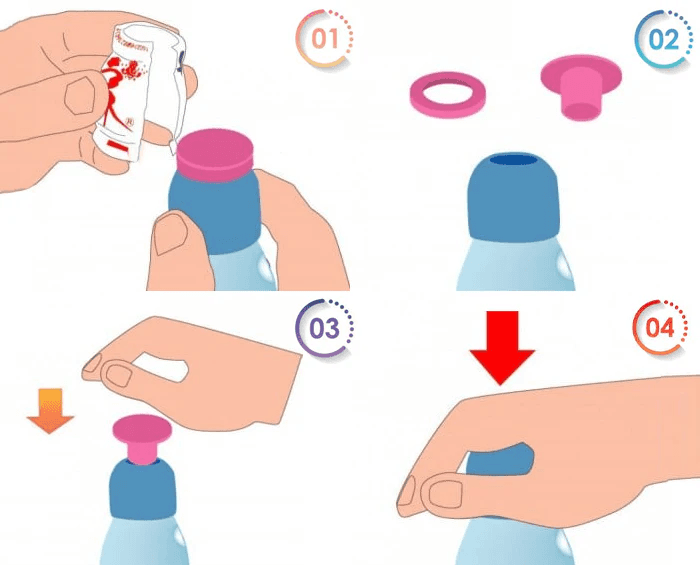
01. Ramune Bottle — Marble Seal System
The Japanese Ramune bottle uses a glass marble to seal carbonation until the user applies force to release it.
What stood out was the simplicity of activation and the clarity of the user interaction. The mechanism is immediately understandable: press, release, mix. This informed the goal of creating a mixing system that feels intuitive and satisfying rather than mechanical or fragile.
02. Twist-to-Mix Bottles
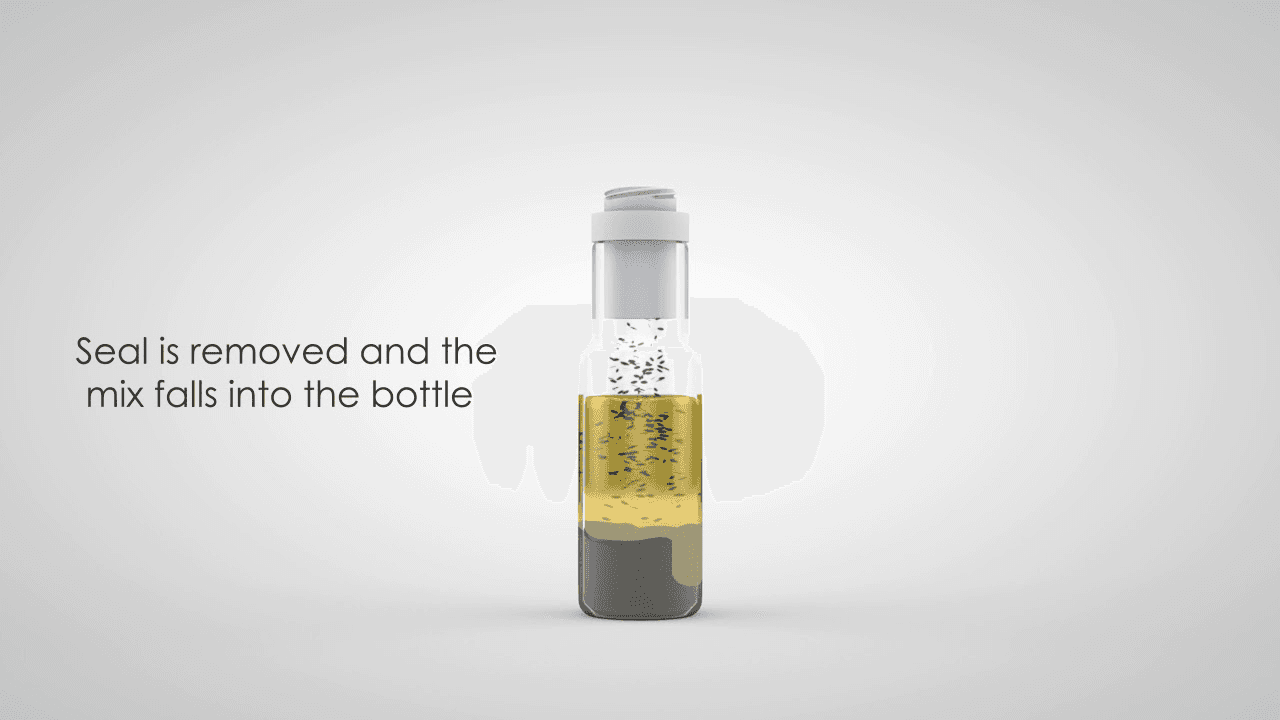
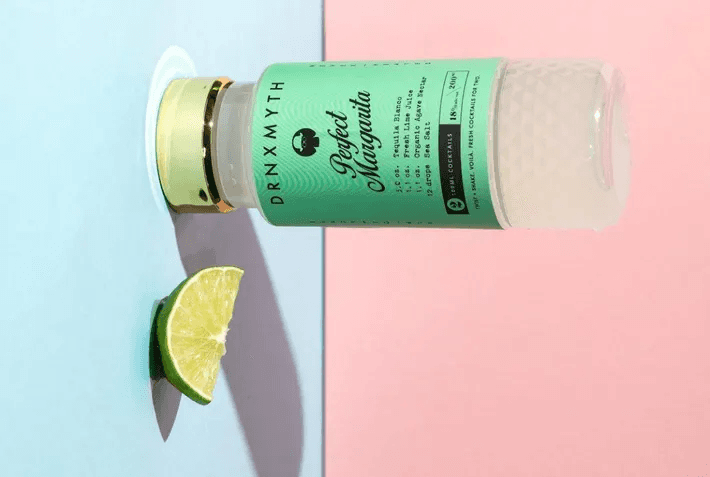
Certain supplement and beverage bottles employ a twist-actuated system to dispense powders into liquids at the point of use.
These systems demonstrated how rotational motion can be converted into controlled internal release, while maintaining a clean exterior form. They also highlighted tradeoffs between complexity, sealing reliability, and manufacturability. Below are two examples: the Twist and Mix Cap, marketed for salad dressing, and the DRNXMYTH bottle, which keeps two components of a cocktail separate until drinking.
03. The At-Home Matcha Aesthetic
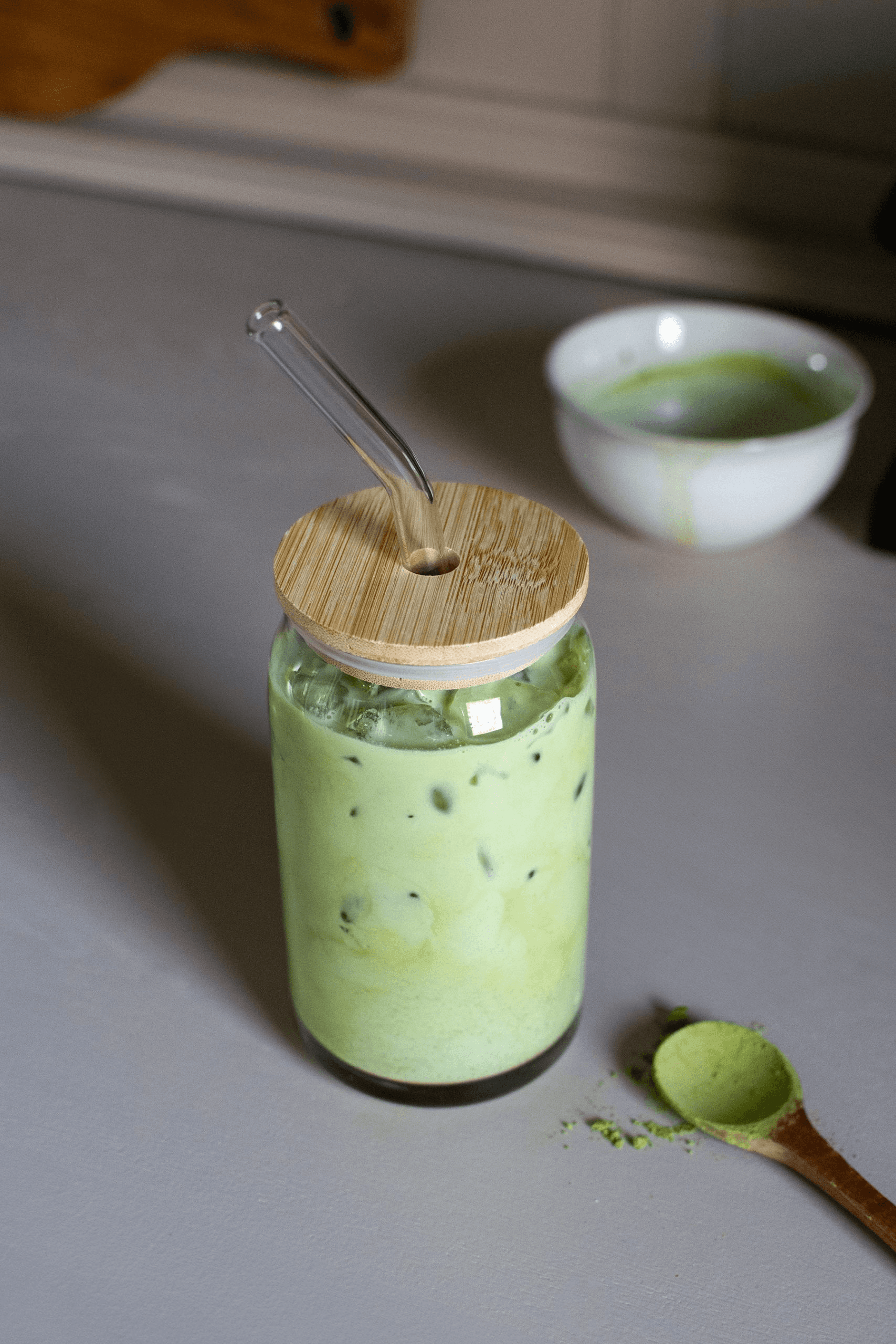
Matcha is often consumed from minimal glass vessels with bamboo lids, emphasizing freshness, ritual, and visual clarity.
This aesthetic informed the concept's exterior direction: even within a standard aluminum can form factor, the product should feel deliberate and clean rather than gimmicky. The goal was to respect the cultural and visual language of matcha while integrating a mechanical system inside.
final design direction
After evaluating multiple concepts, the design moved toward a press-activated lid that ruptures an internal foil barrier, releasing dry matcha into the liquid base below.
The system consists of a sealed upper chamber containing matcha powder, separated from the liquid by a thin internal foil membrane. When the user presses down on the lid, the mechanism breaks the foil, allowing the powder to fall into the beverage. The user then shakes the can to mix.
The top surface remains foil-sealed. After mixing, a straw can be inserted directly through the top foil, piercing both the lid seal and the now-empty matcha chamber to access the drink below.
This approach prioritizes:
Minimal internal components
Clear and satisfying user interaction
Airtight separation prior to activation
Compatibility with modified high-speed canning processes
Rather than introducing a complex mechanical assembly, the final direction simplifies the system to controlled rupture and gravity-driven release, reducing part count while preserving the ritual of fresh mixing.
Outcome
This project reinforced how effective product design often favors simplicity over mechanical novelty. Early concepts explored more elaborate actuation systems, but the press-to-break foil approach proved more reliable, intuitive, and scalable.
One of the most important lessons was understanding how internal mechanisms interact with packaging standards. Designing within the constraints of existing can dimensions, pressure behavior, and food-safe sealing processes required balancing creativity with realism. The strongest iterations were those that reduced complexity while preserving freshness and user experience.
The project also highlighted how mechanical design, manufacturing feasibility, and brand identity intersect. The act of pressing, shaking, and piercing the seal becomes part of the product ritual, connecting the engineering system to the experience of drinking fresh matcha.
Ultimately, the matcha can evolved from a mechanism experiment into a broader exploration of how thoughtful constraint-driven design can transform a simple beverage into a differentiated product.
Related projects