Project
Gearbox
Client
University of Edinburgh
Date
Service
CAD and analysis
Project Overview
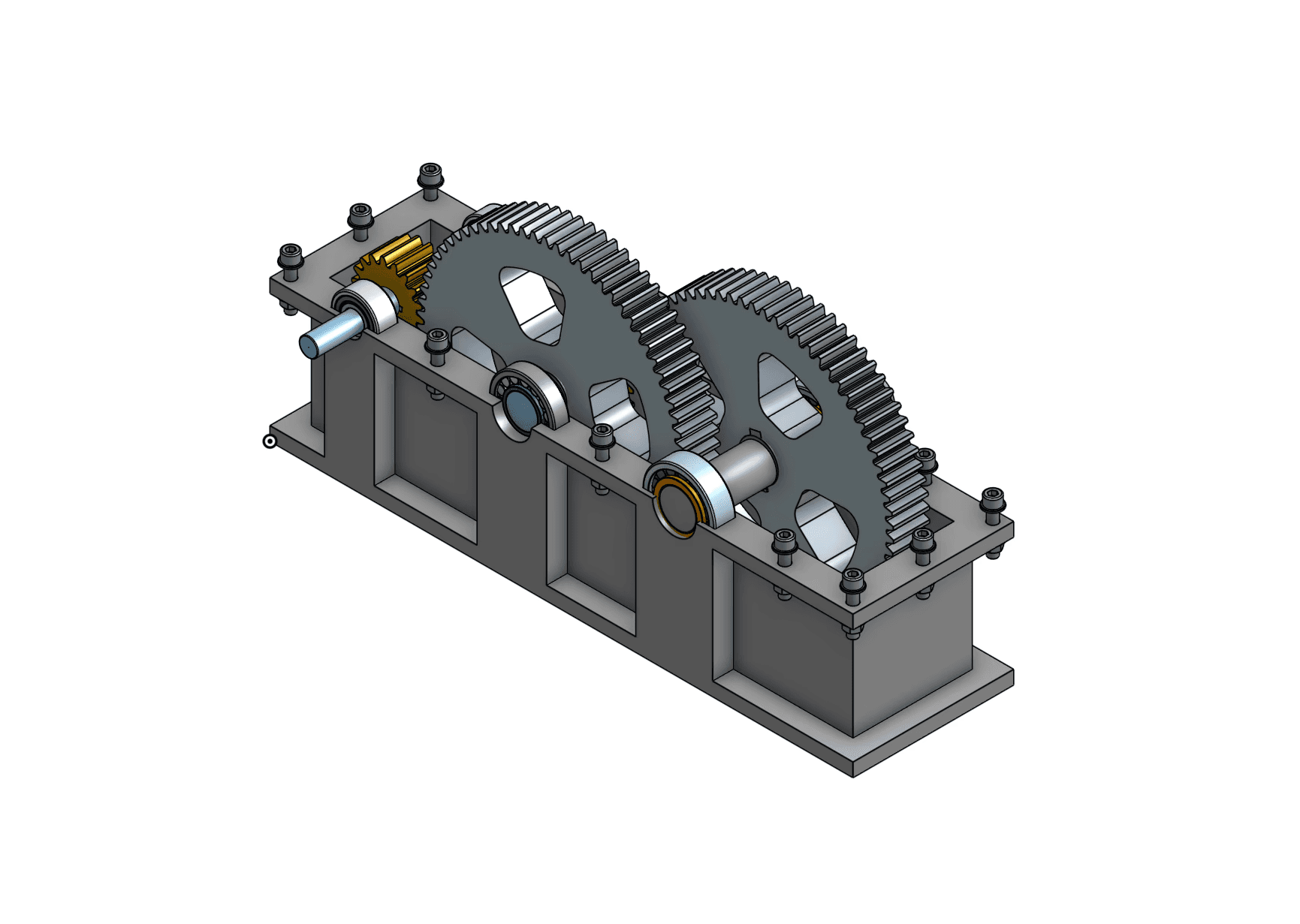
This project involved designing a complete mechanical gearbox as an integrated power-transmission system. The objective was to reliably deliver 20kW of power with 50 N · m of input torque and a 16:1 speed reduction while balancing efficiency, durability, and manufacturability.
Rather than treating gears, bearings, and housing as independent components, the project emphasized how individual design decisions interact at the system level, using analytical calculations and CAD-based evaluation to guide performance and layout.
Skills Strengthened
Mechanical CAD Modeling
Structural Analysis (Hand Calculations + FEA)
Load Path Evaluation
Design Iteration and Validation
Design for Manufacturability
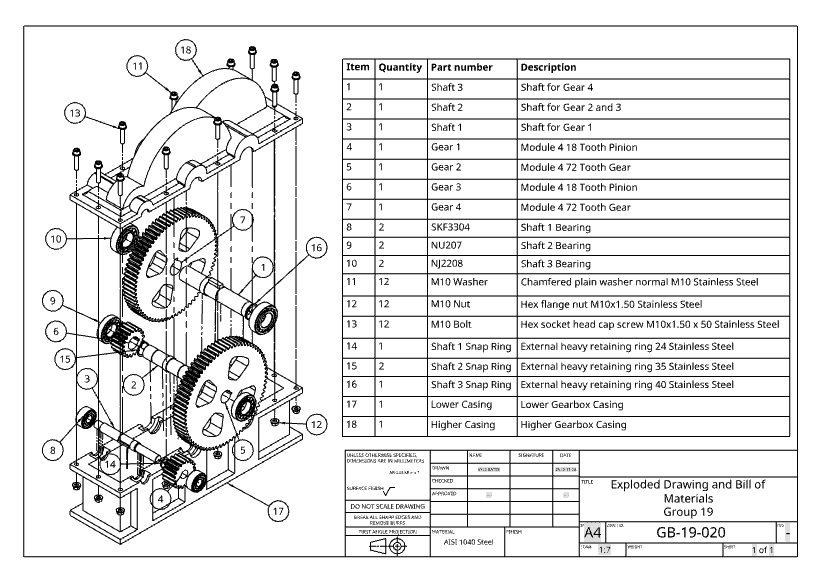
System architecture
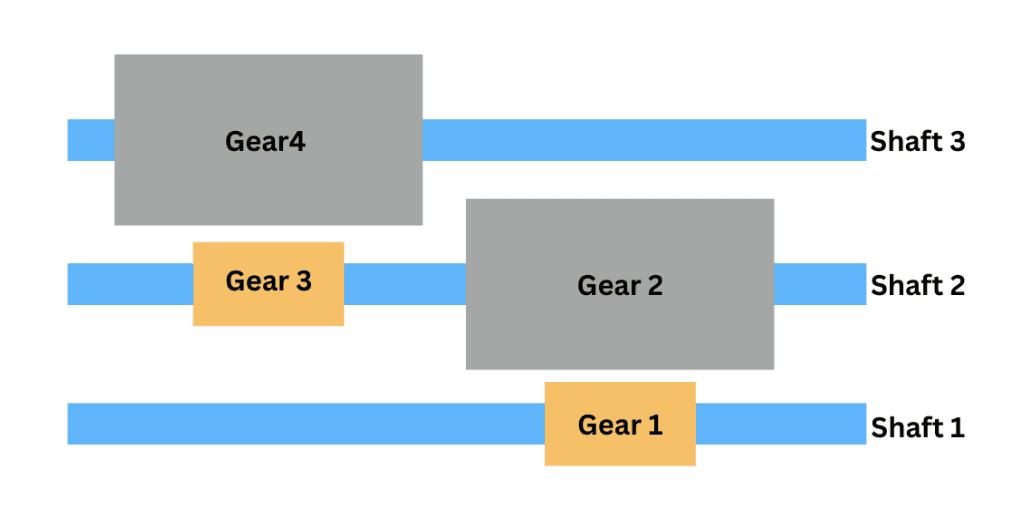
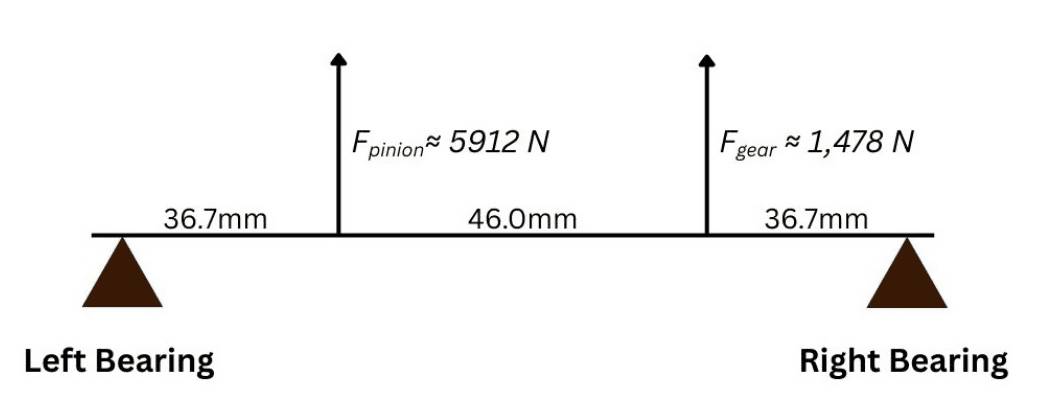
The gearbox layout was defined by required speed reduction, torque transmission, and spatial constraints. Gear stages were selected to achieve a two-stage 1:4 reduction while maintaining acceptable gear sizes, shaft spacing, and bearing loads.
Early layout decisions focused on minimizing unnecessary complexity while preserving accessibility and serviceability. Shaft orientation and gear placement were selected to simplify load paths and reduce bending moments, thereby influencing bearing selection and housing geometry.
Gear, Bearing, and Material Selection
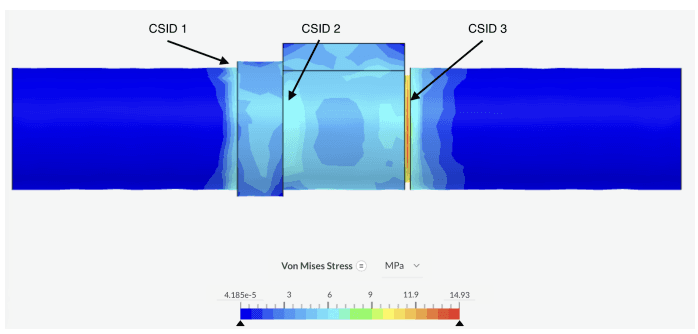
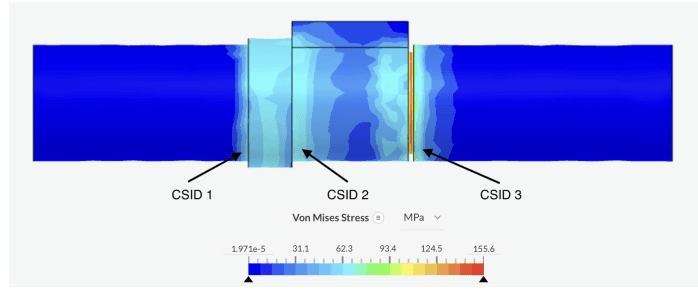
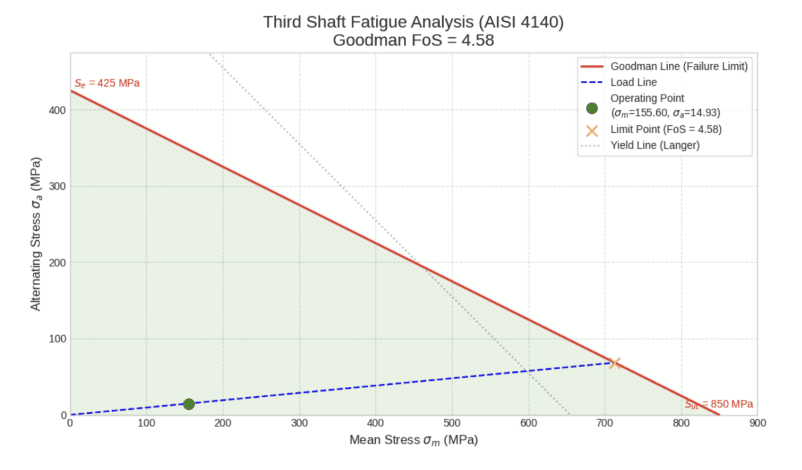
Gear selection balanced ratio requirements, efficiency, and manufacturability. Tooth geometry and sizing were chosen based on calculated loads, expected duty cycles, and allowable stresses, ensuring adequate safety margins without excessive material use.
Bearing selection was driven by combined radial and axial loading, shaft deflection limits, and expected service life. Bearing types and placements were chosen to control shaft alignment and minimize internal misalignment under load.
Material choices for gears, shafts, and housing were informed by strength, wear resistance, and manufacturability considerations. These decisions were made holistically, recognizing that material properties directly influenced allowable stresses, tolerances, and long-term durability.
Packaging and Integration Constraints
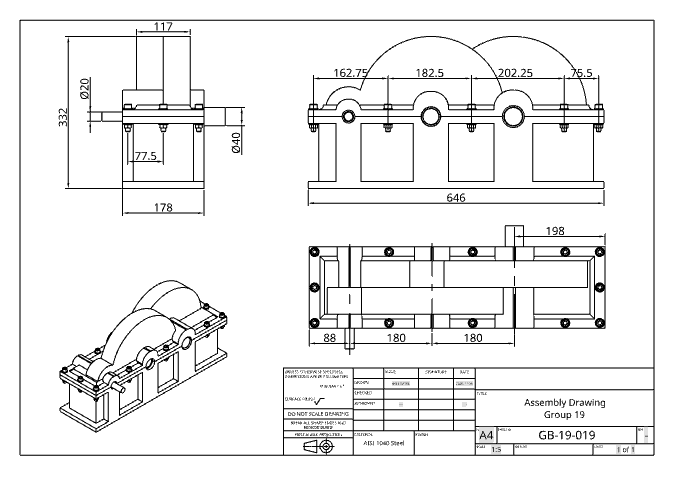
Packaging constraints significantly shaped the final design. Housing geometry had to accommodate gear motion, bearing placement, and assembly access while maintaining structural rigidity. Wall thickness, fastener placement, and internal clearances were iteratively refined to balance strength and manufacturability. Because this was a team project, components were undergoing constant iteration, and we quickly recognized the importance of communication and task division. If a shaft diameter was altered, everything from bearing choices to housing design had to be changed accordingly, which can only be done efficiently through robust and technically fluent communication.
The CAD model served as a central tool for validating clearances, alignment, and assembly sequence, allowing potential interference and tolerance issues to be addressed before finalizing the design.
Outcome
This project reinforced how gearbox design is fundamentally a systems problem rather than a collection of component calculations. Early decisions about layout and architecture had cascading effects on gear sizing, bearing loads, housing stiffness, and manufacturability. Even well-supported component choices could become problematic when integrated into the full system.
One of the most important lessons was the importance of iterating between analysis and geometry. Analytical calculations established feasibility and safety margins, but CAD modeling exposed real-world constraints related to packaging, alignment, and assembly that were not immediately apparent from equations alone. The design improved most when these two modes informed each other continuously.
The project also highlighted the tradeoffs between theoretical optimization and practical execution. Designs that appeared optimal analytically often introduced unnecessary complexity or manufacturing challenges when modeled in full. Simplifying the system—by reducing part count, aligning load paths, or easing assembly—frequently produced better overall outcomes even if it meant sacrificing small gains in efficiency or compactness.
Overall, this gearbox shifted how I approach mechanical design. I now prioritize system architecture early, treat packaging and assembly as first-order design constraints, and view analysis as a tool to inform decisions rather than an endpoint. The project strengthened my ability to reason through interconnected mechanical systems and make design choices that hold up beyond the spreadsheet.
Related projects