Project
Cutting Board
Client
Misericordia
Date
2023-2024
Service
Adaptive Design
Project Overview
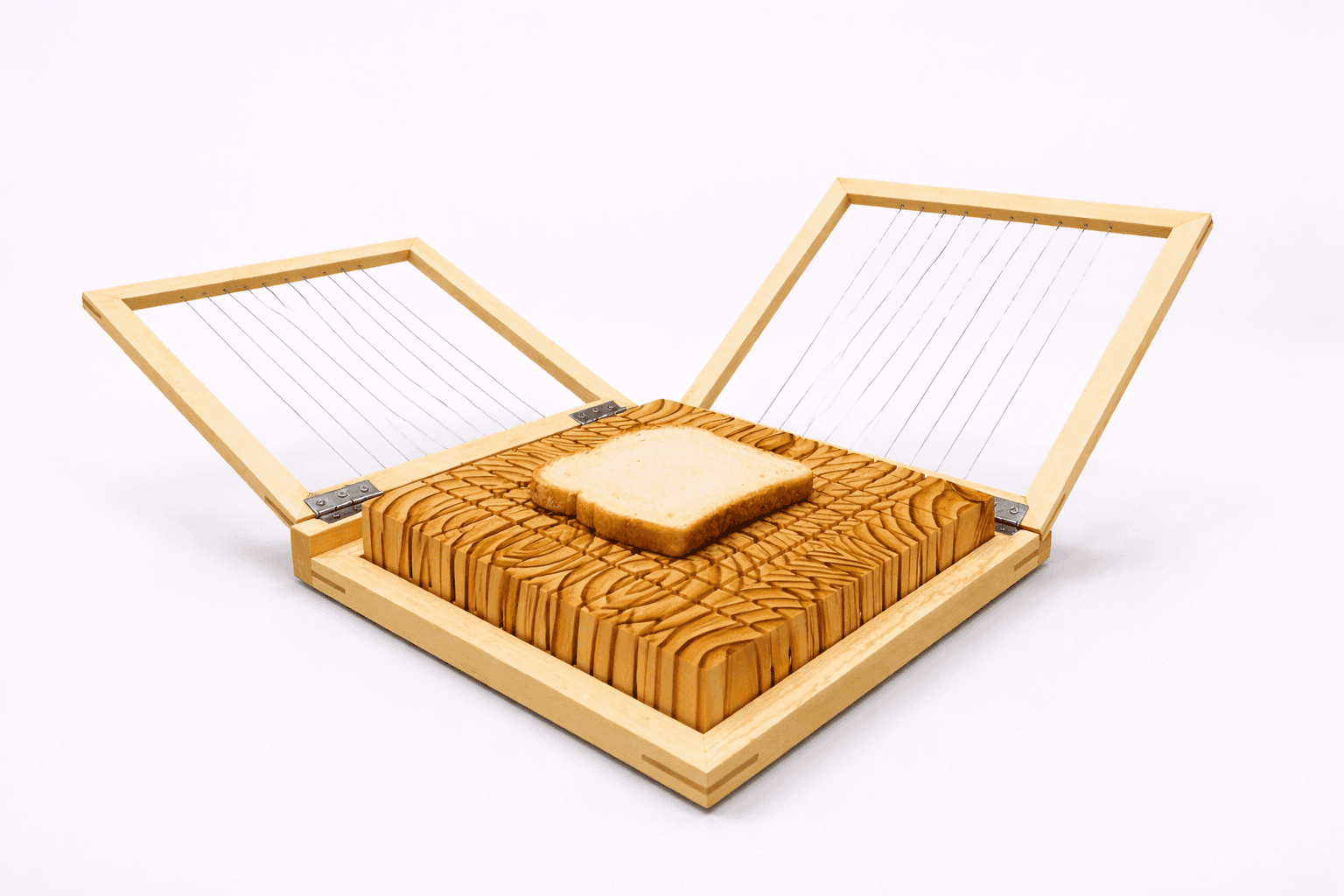
This project involved the design and fabrication of an adaptive kitchen tool developed in collaboration with Misericordia to support independent food preparation for individuals with aphasia and other physical and developmental disabilities. The goal was to enable users to safely cut food into doctor-prescribed portion sizes while remaining intuitive, stable, and unobtrusive.
The project was completed as a group effort, with my role focused on design development, prototyping, and translating user needs into manufacturable solutions.
Skills Strengthened
User-informed design
Translating qualitative needs into physical constraints
Prototyping for safety and stability
Collaborative design decision-making
Designing for manufacturability
Design Focus
Stability and safety
The cutting board was designed to remain fixed during use, reducing the need for fine motor control while keeping hands clear of the cutting path.
Usability without visual clutter
Features were integrated directly into the board geometry rather than added as external attachments, prioritizing clarity and ease of use over overtly “assistive” aesthetics.
Manufacturability
Materials and fabrication methods were selected to support durability, cleanability, and straightforward production without specialized tooling.
Outcome
This project emphasized the importance of designing around specific, real constraints rather than generalized assumptions. Working with users who had doctor-prescribed portion requirements made precision and repeatability just as important as usability, shifting the focus from conceptual accessibility to practical, everyday function.
One of the key lessons was learning how to translate user needs into physical constraints. Rather than relying on abstract ergonomic guidelines, design decisions were driven by direct interaction with users and caregivers, which clarified what features were essential and which added unnecessary complexity.
The project also reinforced the value of restraint in adaptive design. The most effective solution was not the one with the most features, but the one that quietly enabled independence without drawing attention to itself. This experience strengthened my ability to design with empathy while maintaining a function-first, manufacturable approach.
Related projects