Project
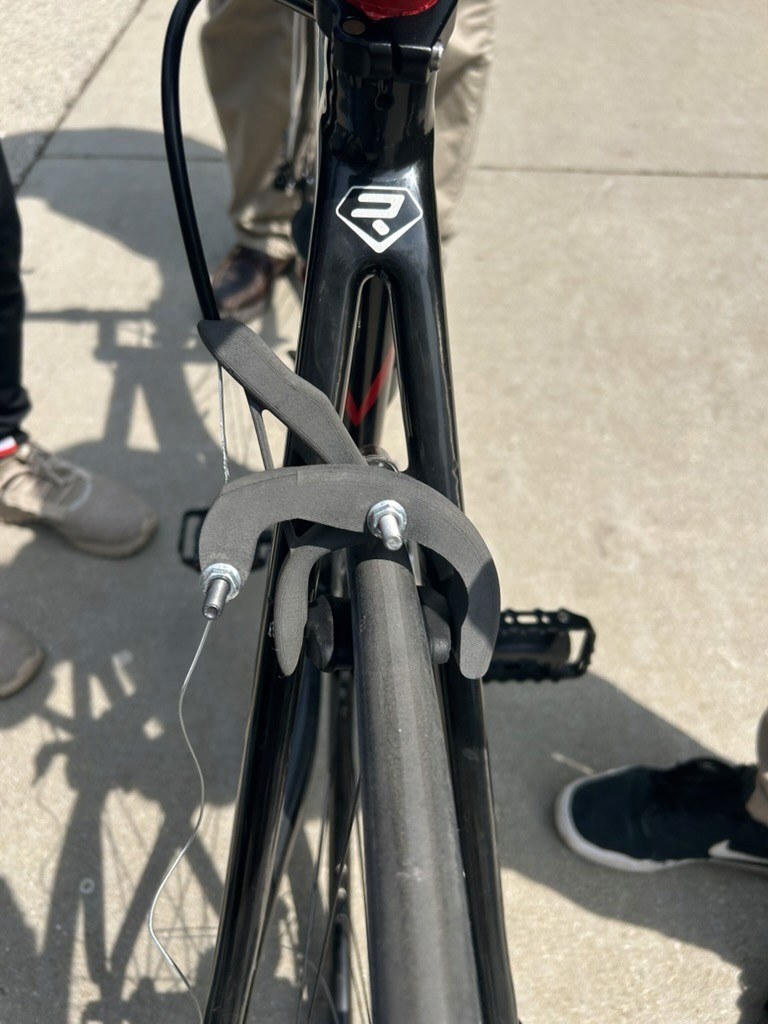
Bike Brake Caliper
Client
McCormick Engineering
Date
Apr 6, 2025
Service
Analysis for Manufacture
Project Overview
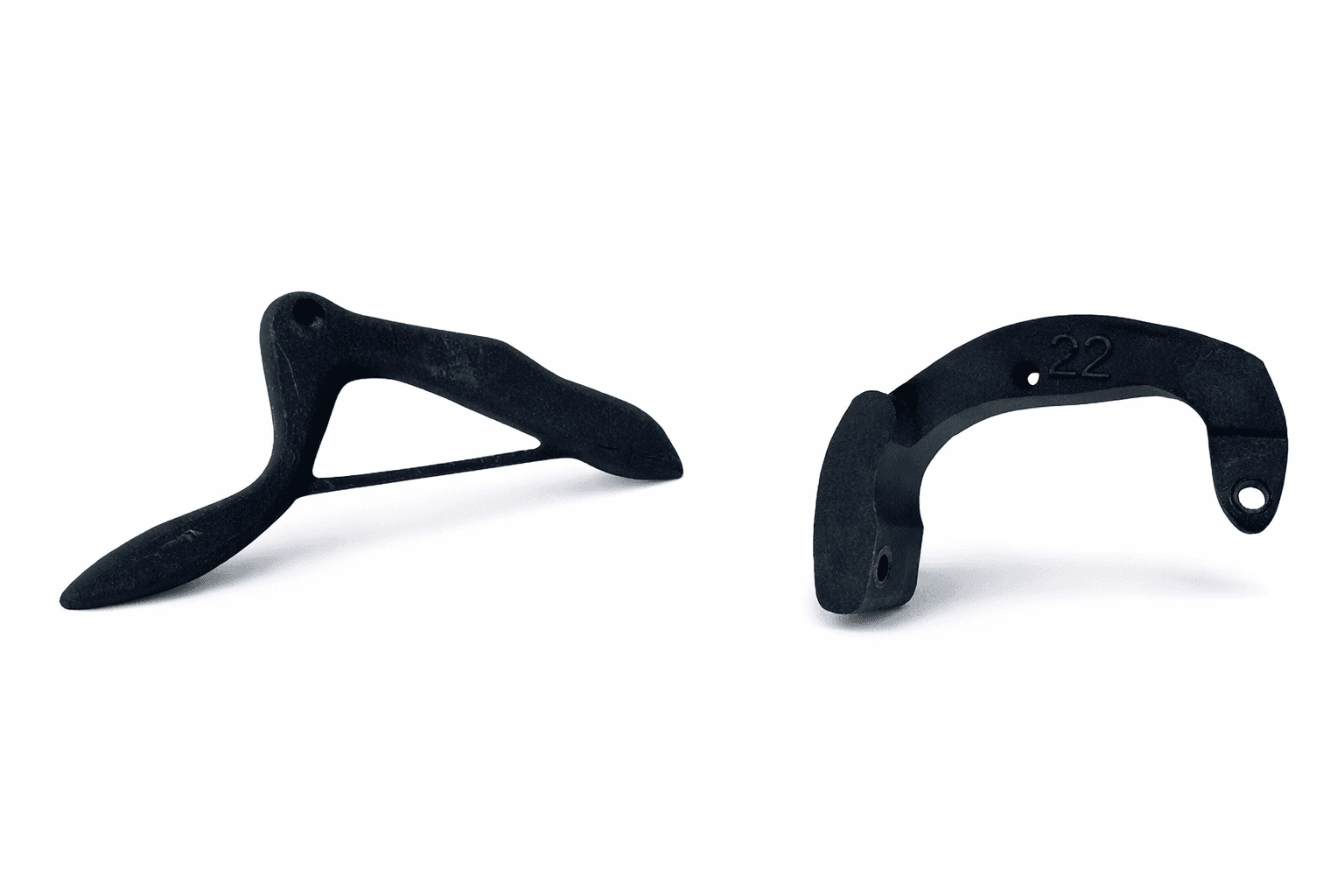
This project involved the design and validation of a precision bicycle brake caliper completed as a group project, with a focus on structural performance, stiffness, and manufacturability. The objective was to develop a caliper geometry capable of reliably transmitting braking forces while minimizing mass and remaining compatible with realistic manufacturing constraints.
Within the team, I was responsible for CAD development, hand calculations, finite element analysis, and physical testing, contributing directly to the design decisions, analysis workflow, and validation of the final geometry.
Skills Strengthened
Mechanical CAD modeling
Hand calculations for load estimation
Finite element analysis and interpretation
Failure mode identification beyond yielding
Iterative geometry refinement
Design validation through testing
Collaboration within a technical design team
Design problem & hypothesis
Problem
Brake calipers operate in a stiffness-critical regime: small deflections at the pads can significantly degrade braking performance, while mass and manufacturing complexity must remain controlled. The challenge was to balance stiffness, strength, and manufacturability within a compact, highly loaded component.
Initial hypothesis
A conservative, stiffness-first geometry would provide a reliable baseline for understanding force transmission. Once load behavior was well characterized, material could be removed strategically without compromising performance.
Key design decisions
Prioritizing stiffness over mass in early geometry
The initial caliper geometry was intentionally conservative, using thicker sections and simplified structural members to minimize deflection under braking loads. This approach established a stable reference point for evaluating load paths and deformation behavior.
Using analysis to guide geometry refinement
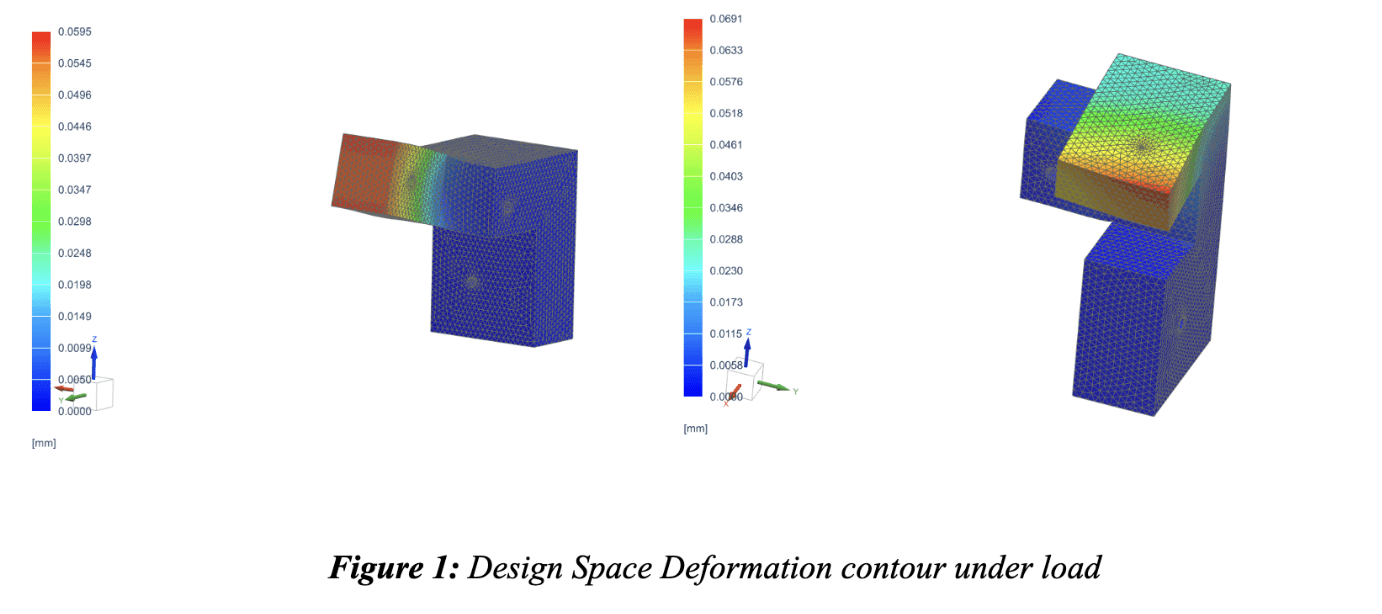
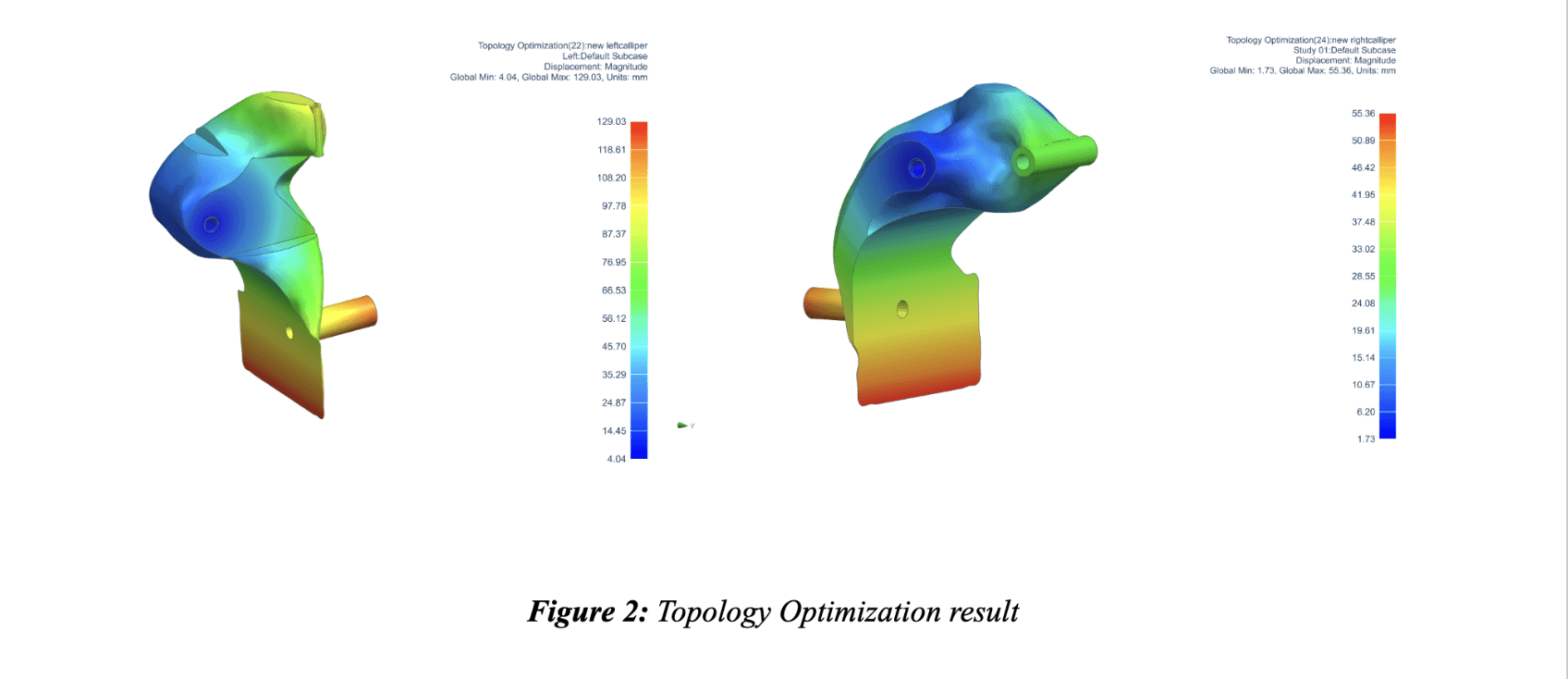
Rather than treating FEA as a pass/fail check, simulation results were used to identify inefficient material placement and low-stress regions. Geometry was reshaped to better align with dominant load paths, improving stiffness-to-weight efficiency without increasing manufacturing complexity.
Failure & Revision
Buckling instability identified during refinement
While stress-based analysis indicated acceptable safety factors, a later iteration exhibited a buckling-driven instability under compressive loading. This failure mode was not captured by von Mises stress alone and exposed an incorrect assumption that yielding was the dominant risk.
Design response
The caliper arms were revised to increase out-of-plane stiffness through localized geometric changes rather than added material. This eliminated the instability while preserving manufacturability and reinforced the importance of considering multiple failure modes during early-stage design.
Outcome
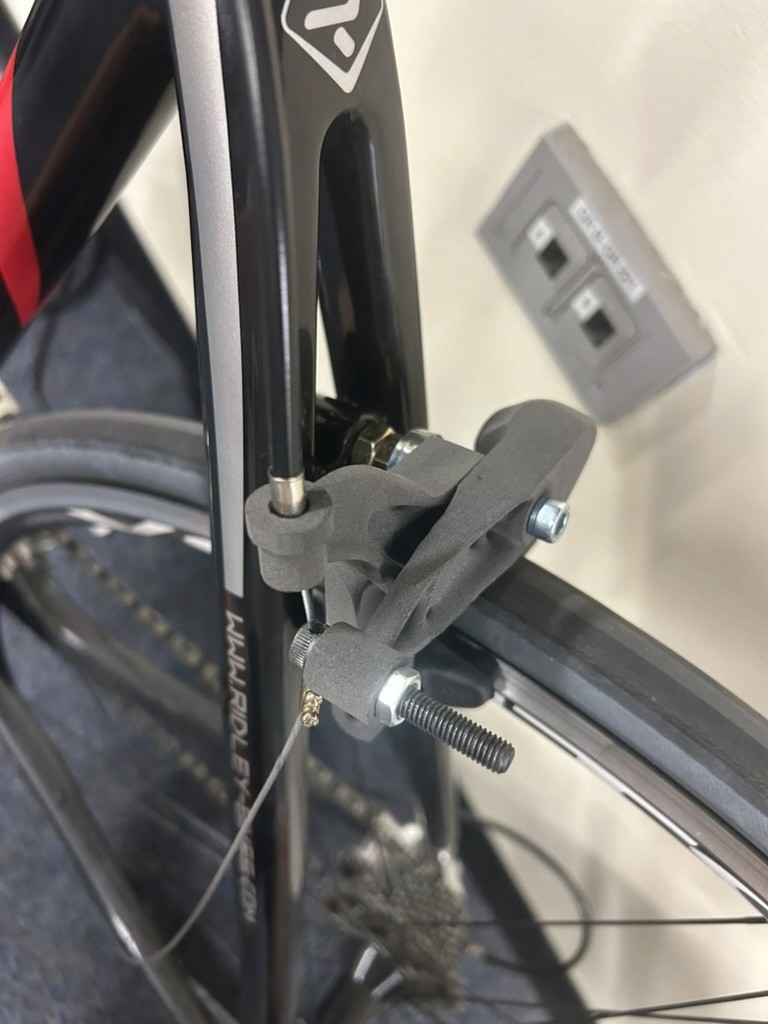
This project reinforced the importance of early planning and systems-level thinking in engineering design, particularly when performance, manufacturability, and real-world constraints are tightly coupled. While analytical tools such as hand calculations, FEA, and topology optimization were effective for guiding material removal and improving load paths, physical testing revealed limitations in our assumptions—most notably an unanticipated buckling failure that significantly impacted braking performance. This highlighted the gap between simulated behavior and real mechanical response, and underscored the need to consider failure modes beyond stress and deflection alone.
Iterative testing also demonstrated how design decisions made early in the process can introduce downstream consequences in assembly, cable alignment, and force transmission that are difficult to fully correct later. Addressing these issues required balancing competing priorities such as weight reduction, structural stiffness, ease of installation, and aesthetic intent. Overall, the project strengthened my ability to anticipate downstream effects of design choices, evaluate tradeoffs across analysis and manufacturing domains, and approach complex mechanical systems with a more disciplined, test-informed engineering mindset.
Related projects