Project
Boat Build
Client
Personal Project
Date
June 2025 - Present
Service
Design and Manufacture
Project Overview
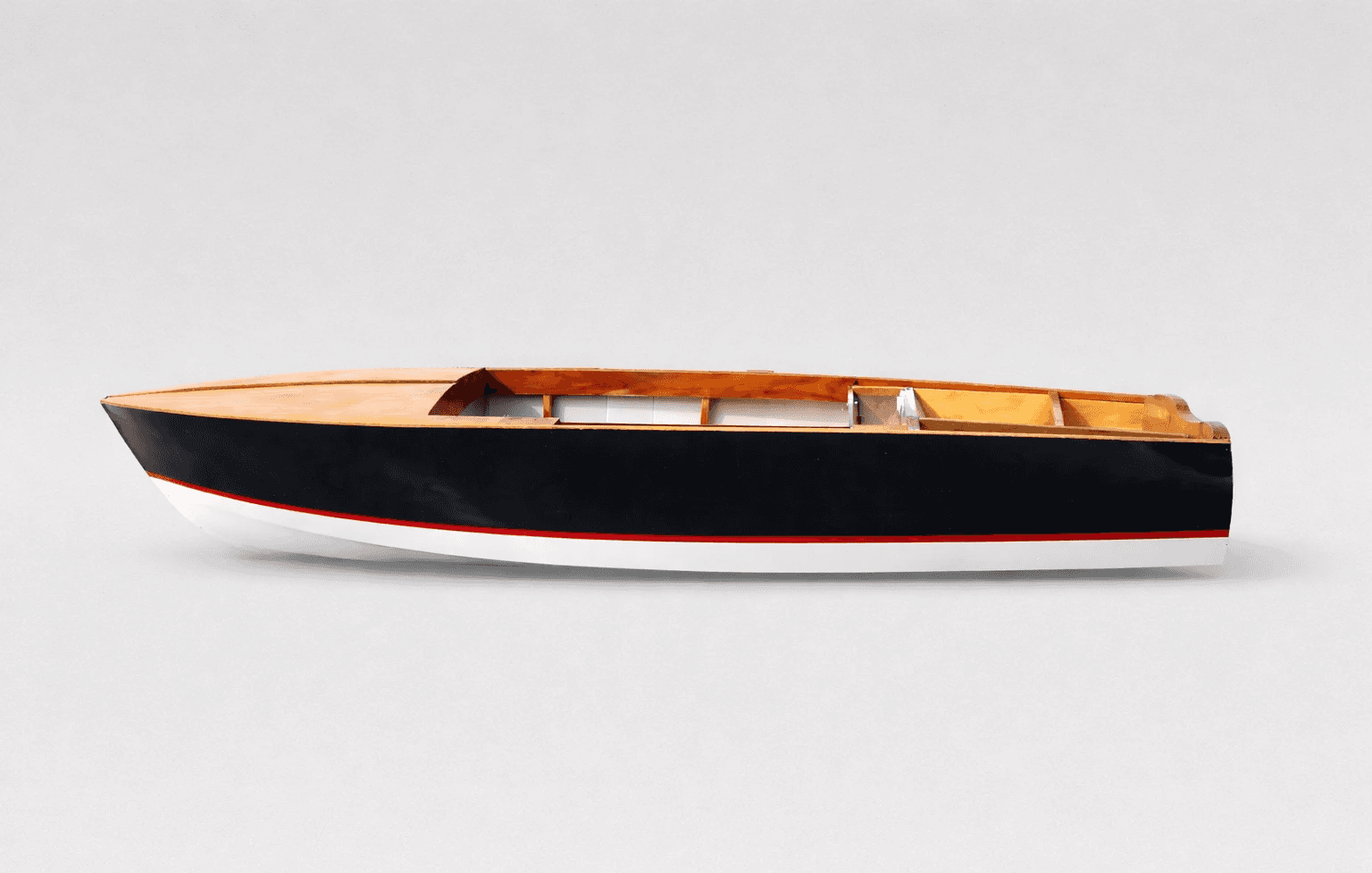
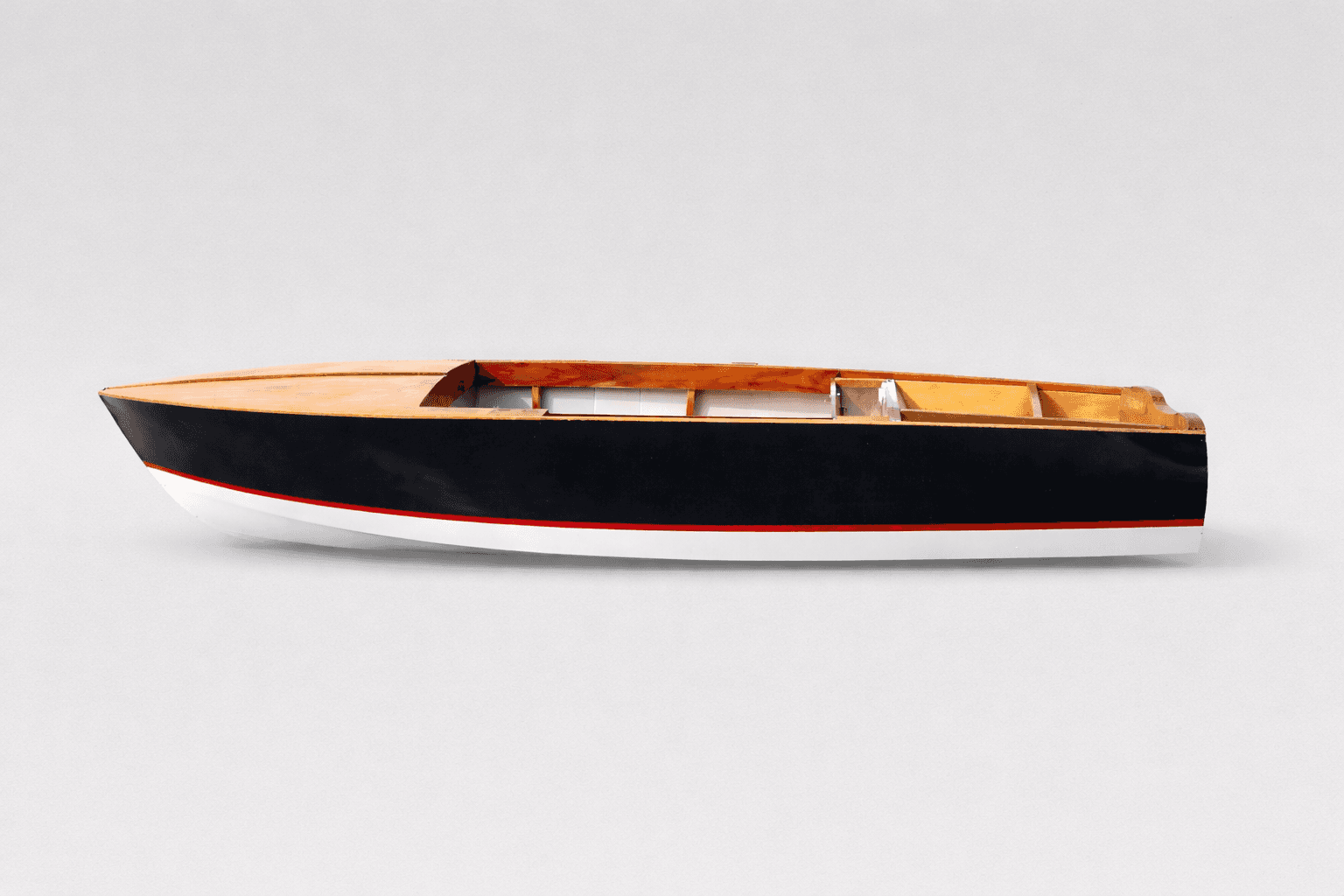
This project involved the design and construction of a 17-foot mahogany runabout, adapting mid-century runabout designs and construction methods to meet my own performance goals while incorporating modern manufacturing techniques. The objective was to execute a full-scale, structurally sound vessel that balanced legacy design intent with contemporary tools, materials, and build practices.
The project spanned concept adaptation, structural decision-making, fabrication planning, and long-horizon execution, requiring sustained coordination across design, manufacturing, and assembly stages.
Skills Strengthened
Large-scale project planning and execution
Structural decision-making under real constraints
Manufacturing sequencing and tolerance control
Material behavior in full-scale construction
Adapting legacy designs to modern fabrication methods
Long-term iteration and follow-through
Adapting legacy designs to modern tools
Rather than copying traditional methods directly, I treated them as design intent.
Proven hull geometry and structural layout were preserved, while CNC-cut components, digital layout, and modern adhesives were used to control accuracy and reduce cumulative error.
Modern tools were applied selectively to improve repeatability without altering the underlying design logic.
Failures and lessons
Material behavior at scale
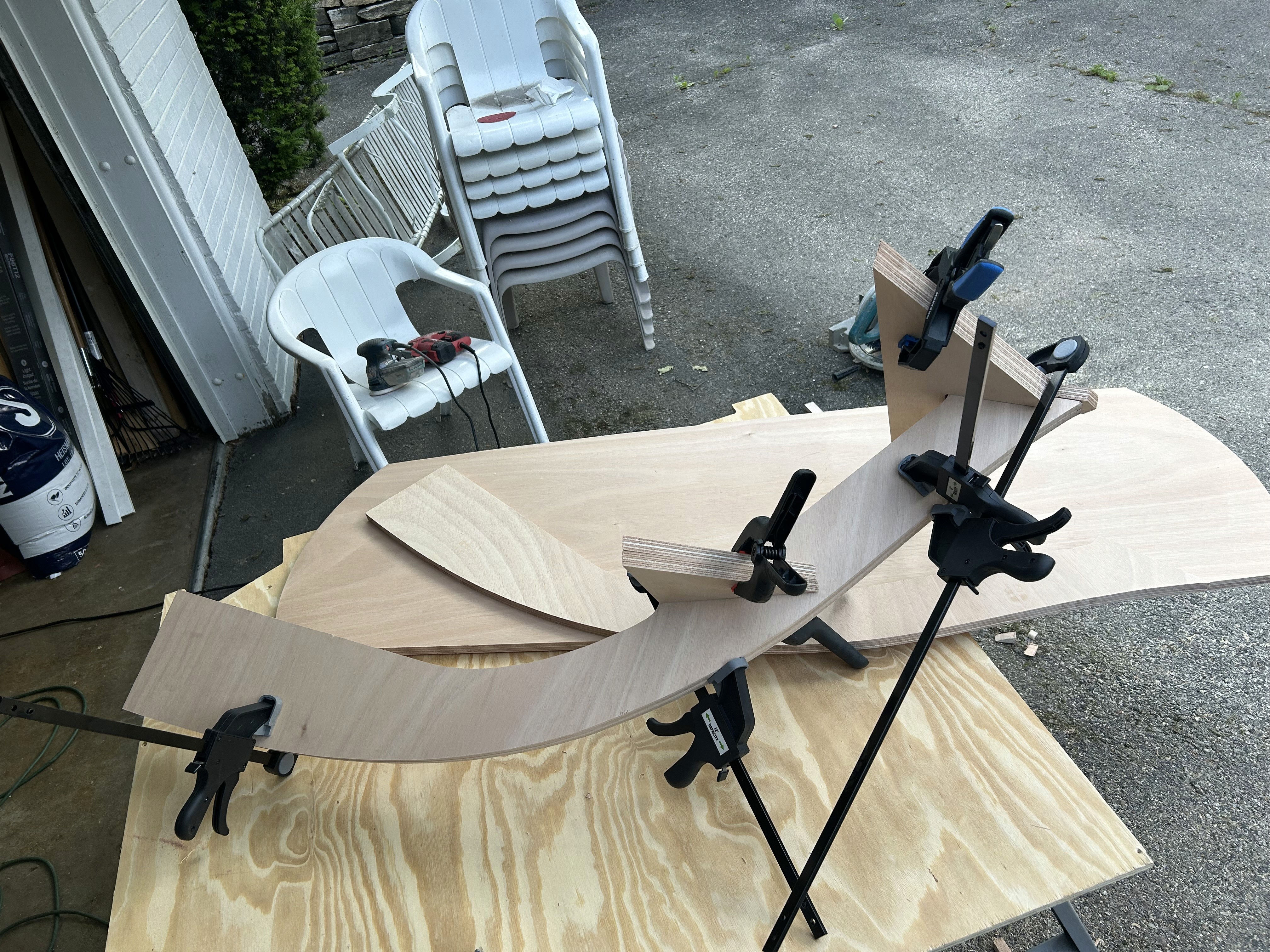
Wood movement during bending and fastening was more pronounced than expected, forcing changes in preparation and installation methods.
Tolerance stack-up
Small alignment errors early compounded aggressively later, making early reference geometry far more critical than anticipated.
Sequencing mistakes
Some operations limited flexibility when done too early, reframing sequencing as a design problem rather than a scheduling one.
Process Highlights
01. Establishing reference geometry
Early alignment dictated everything downstream.
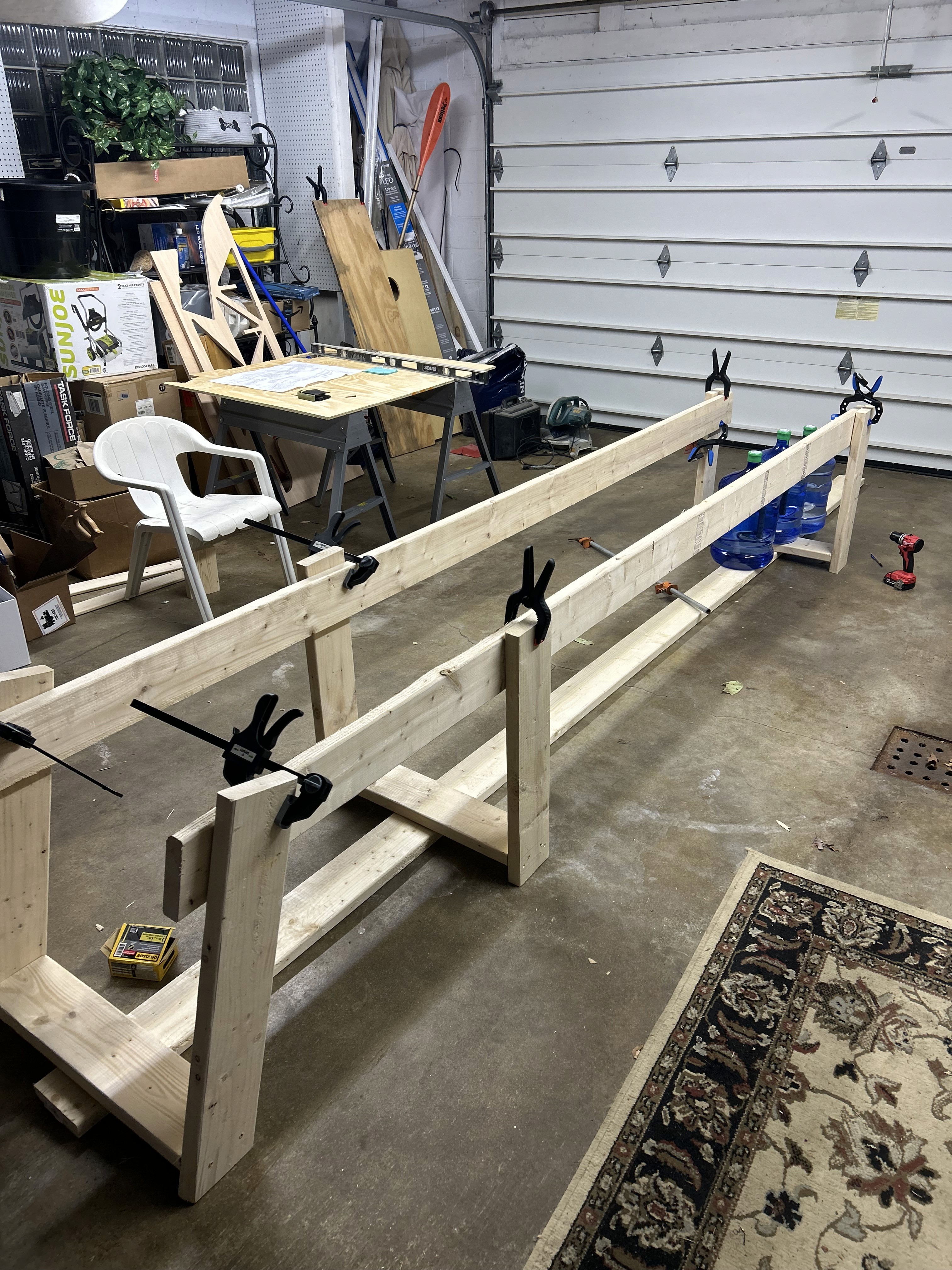
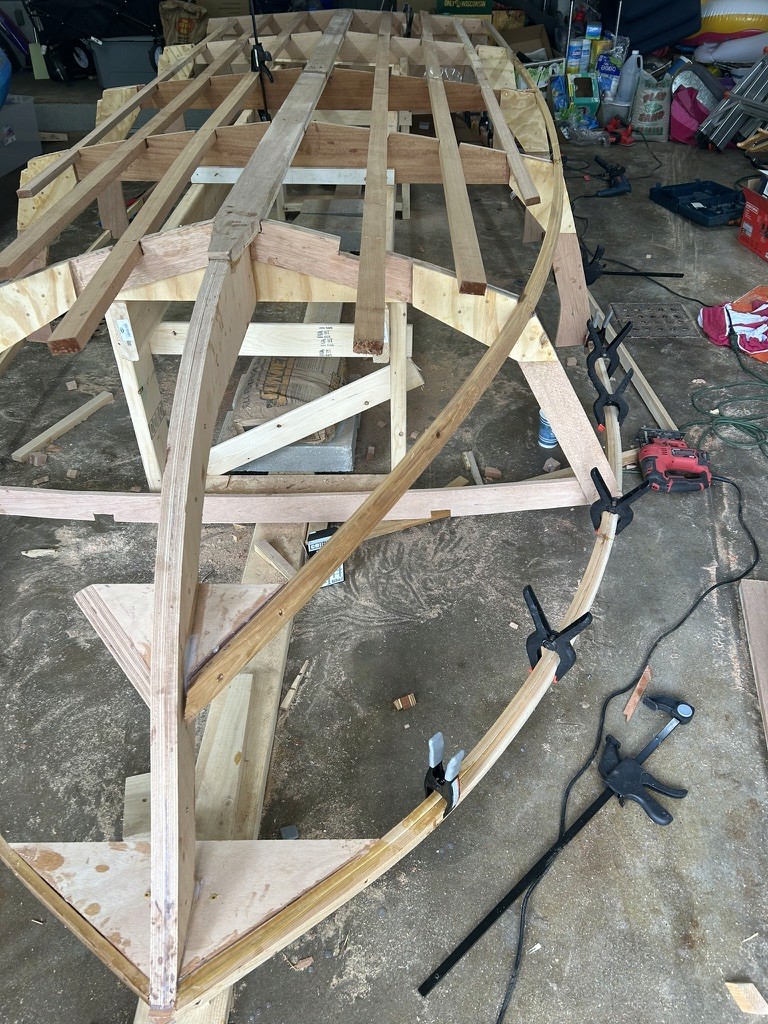
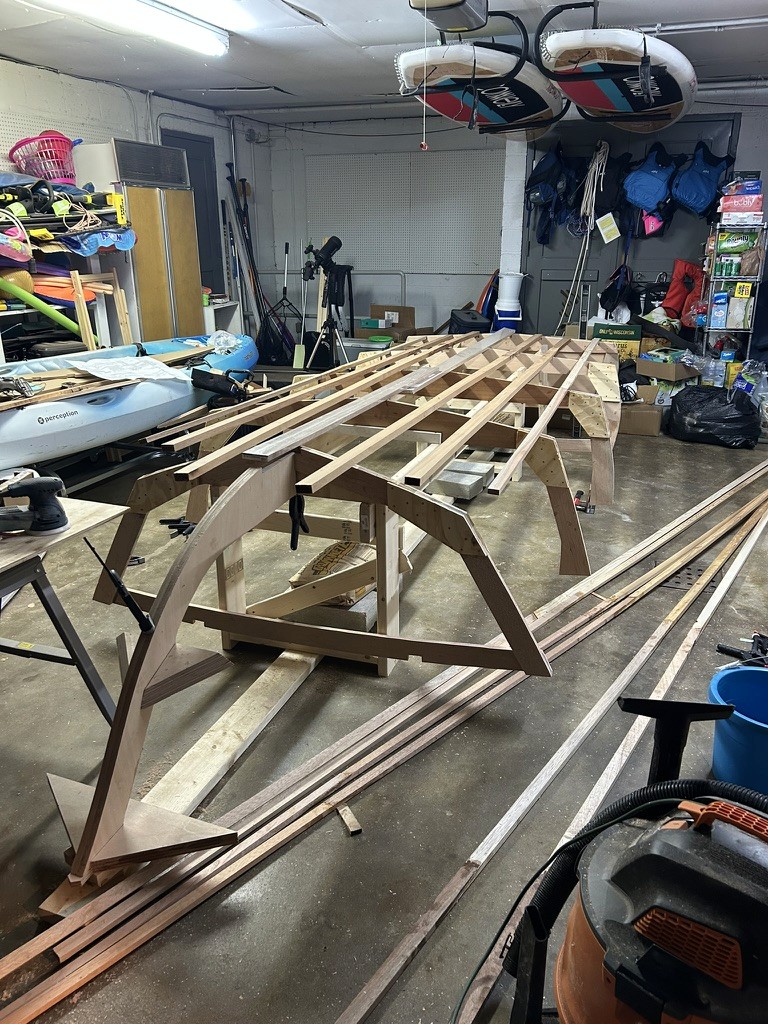
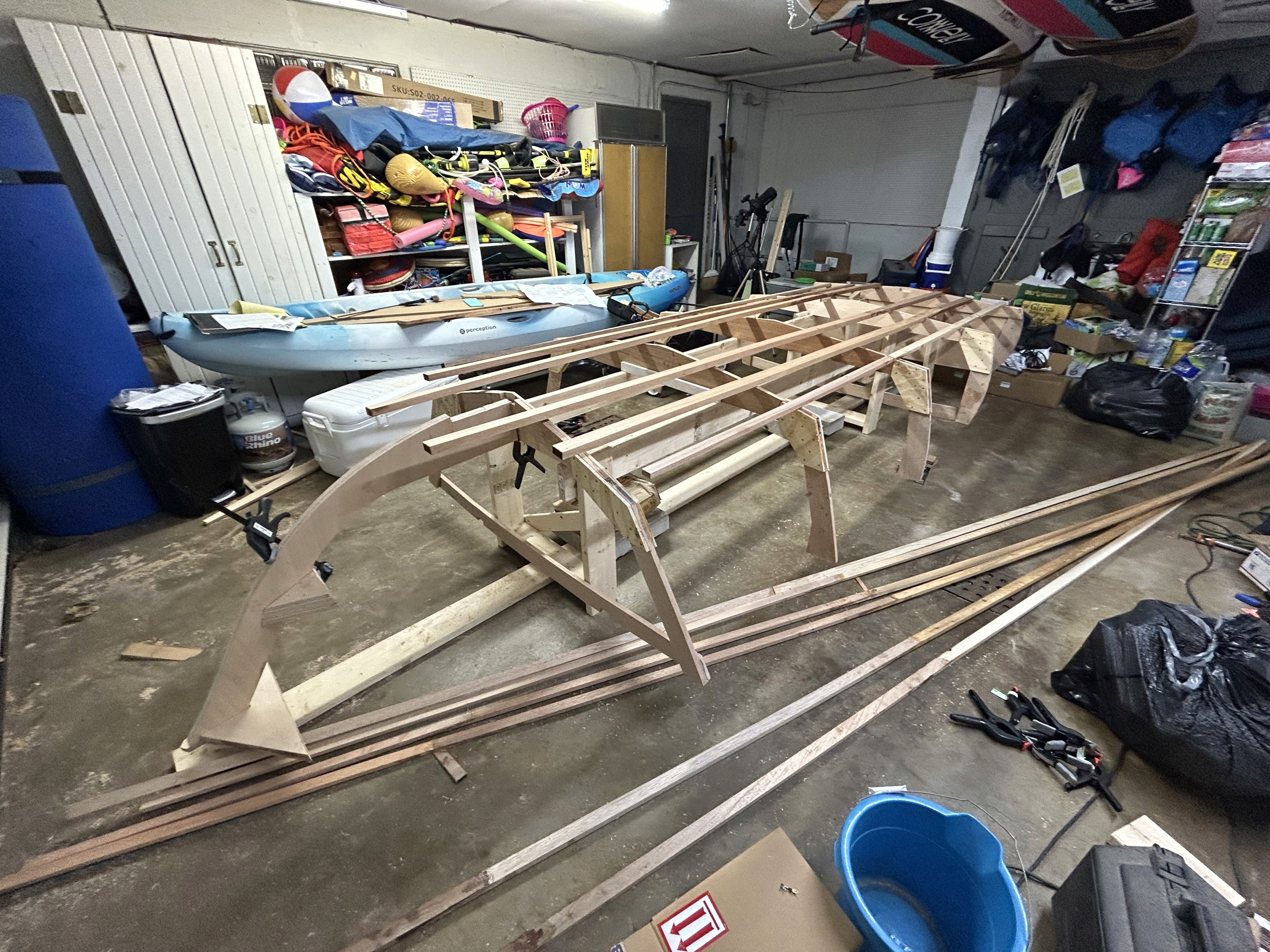
02. Structural assembly
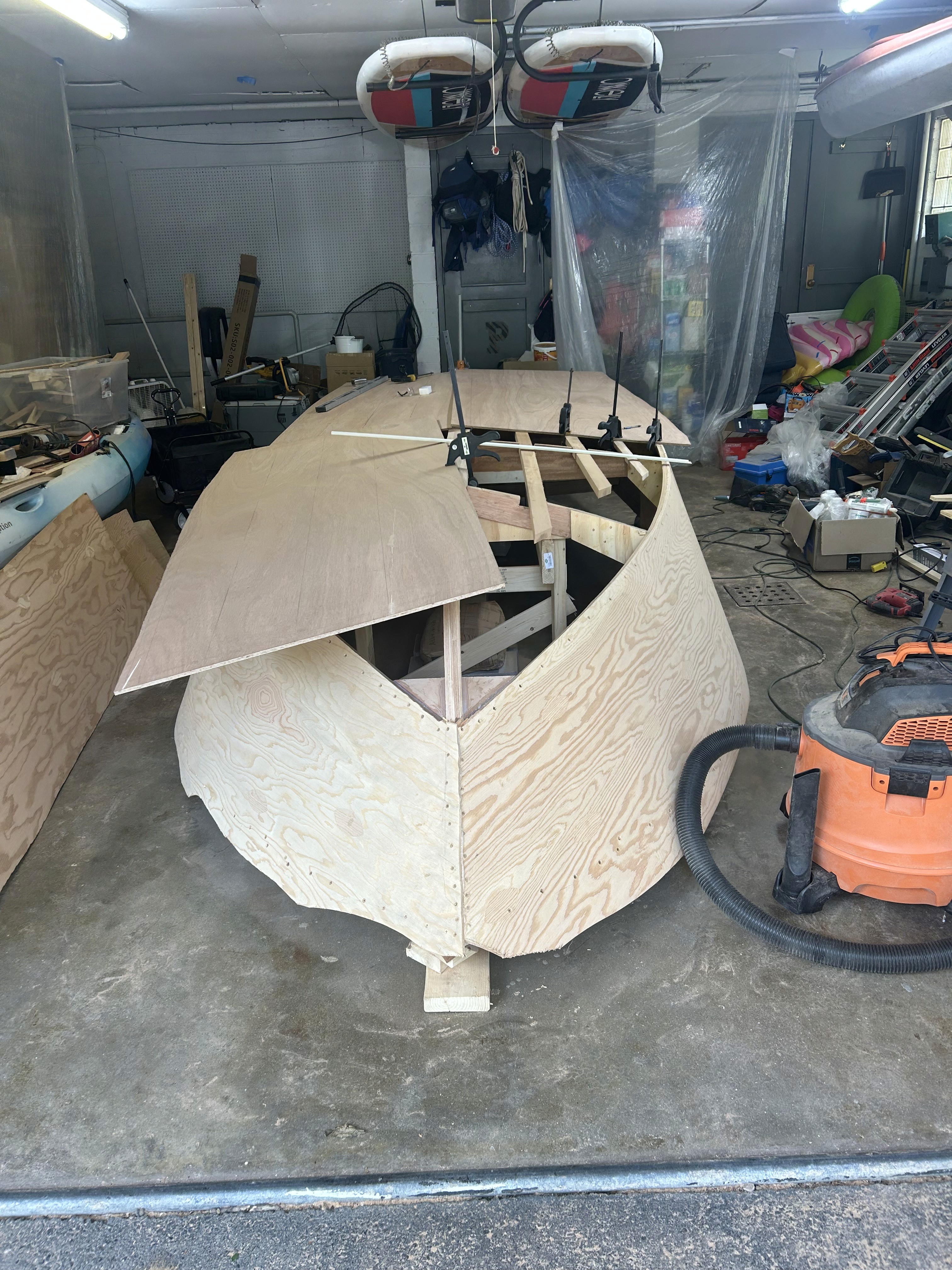
Frames, keel, chines, and sheers brought the system together.
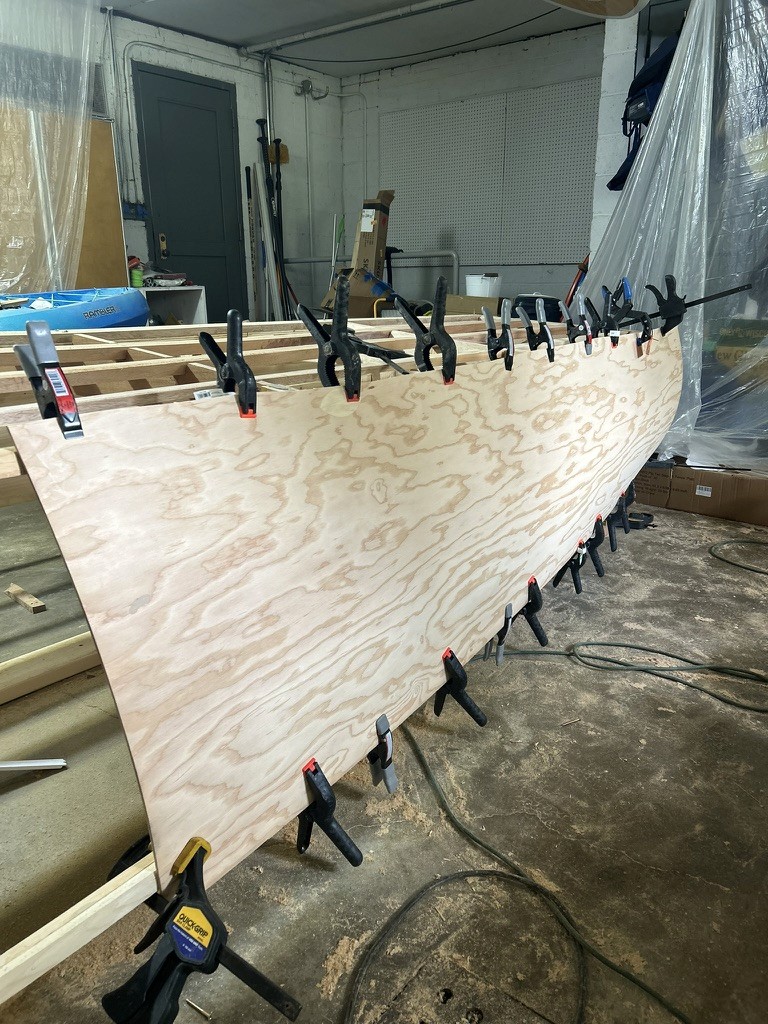
03. Planking and fairing
Where structural and aesthetic decisions converged.
04. Finishing and integration
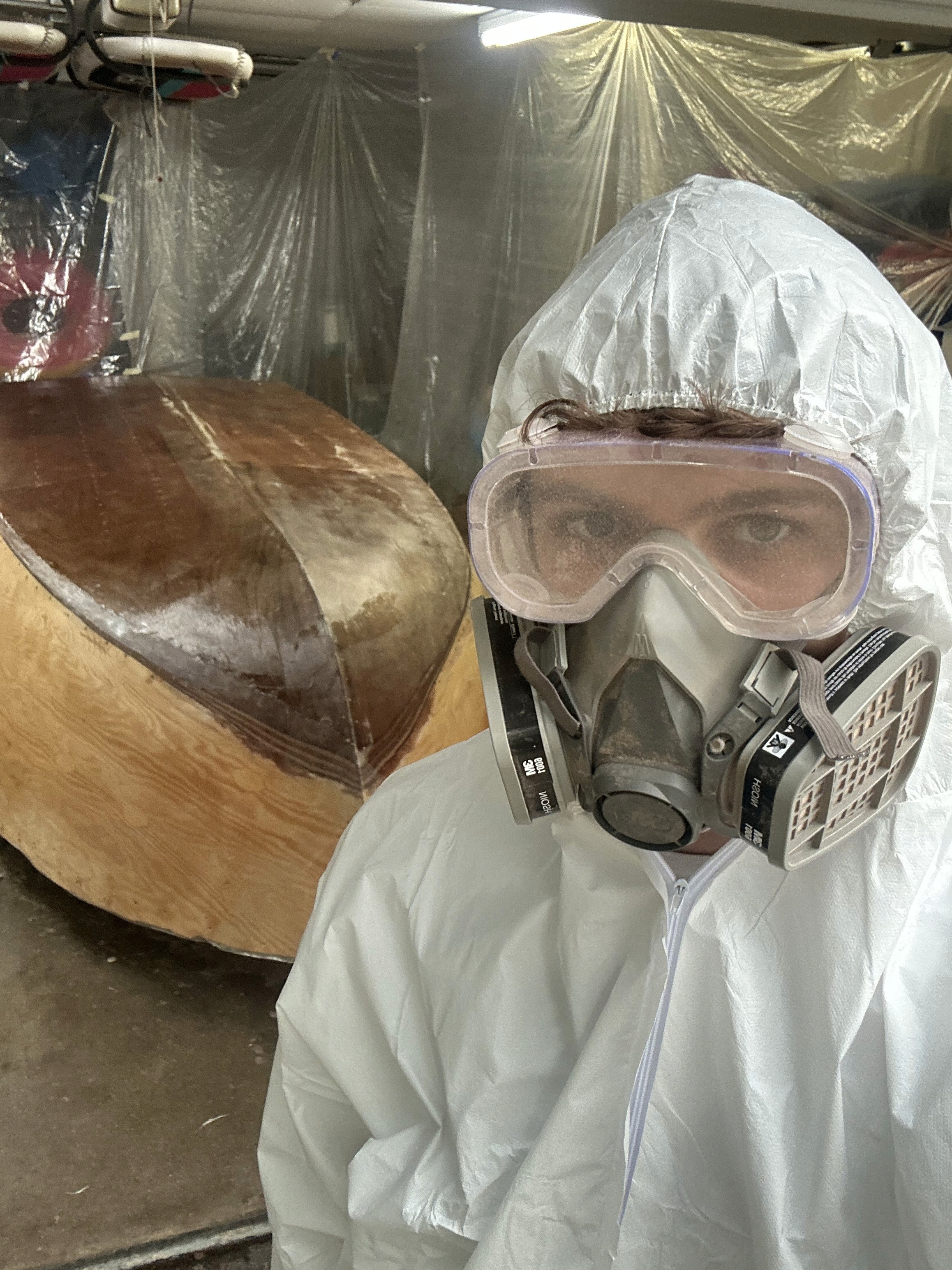
Irreversible steps required patience and restraint.

Outcome
The runabout is structurally complete, with final electrical, mechanical, and aesthetic systems scheduled for installation this spring. While the project is still being finished, the core lessons were established well before completion.
One of the most important takeaways was the value of planning with a clear end state in mind. There were multiple points where decisions were made based on what made sense locally or in the moment, without fully considering how those choices would affect work weeks later. In several cases, this led to unnecessary rework and reinforced how critical it is to think several steps ahead, especially in projects where early decisions become difficult or impossible to undo.
The project also highlighted how much of large-scale work is management rather than fabrication. Coordinating purchases, shop time, material availability, and sequencing often dictated progress more than any single technical challenge. Building according to a set of instructions is relatively straightforward; managing a long, interdependent process while maintaining quality and momentum proved far more demanding.
Overall, this project reshaped how I approach complex builds. I now place greater emphasis on defining end goals early, evaluating downstream consequences before committing to decisions, and treating planning and coordination as integral parts of the design process rather than overhead.
Related projects